The world of Google Ads 2026 is completely different from what marketers knew just a few years ago. If you’re still building campaigns around traditional keyword lists, you’re already falling behind. Google Ads 2026 has revolutionized digital advertising with AI-powered targeting that makes old-school keyword strategies obsolete.
As businesses scramble to adapt to Google Ads 2026 changes, understanding this transformation isn’t optional—it’s survival. Whether you’re managing campaigns in-house or partnering with the best digital marketing agency in Gurgaon, mastering the new targeting model will determine your advertising success in the years ahead.
Why Google Ads 2026 Killed Traditional Keyword Targeting
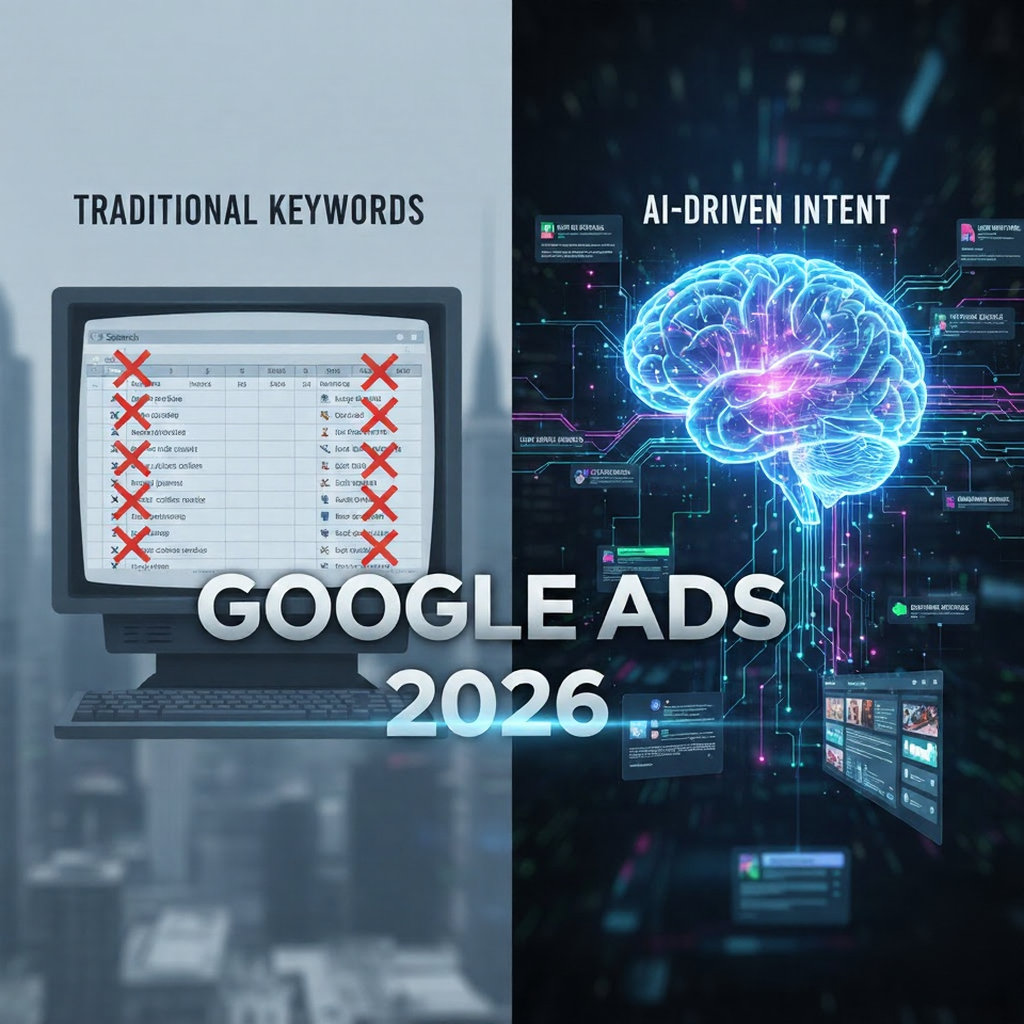
Google Ads 2026 represents the culmination of years of AI development. The platform has completely transformed from keyword-centric campaigns to intent-based targeting. This isn’t a minor update—it’s a fundamental reimagining of how advertising works.
Traditional keyword targeting always had limitations. A customer searching for “running shoes for flat feet,” “best sneakers flat foot support,” or “athletic footwear pronation control” has the same intent but uses different words. In the past, advertisers needed separate keywords for each variation.
Google Ads 2026 eliminates this inefficiency. The AI now understands user intent regardless of specific search terms. This shift mirrors what we’ve seen with zero-click SEO, where understanding intent matters more than targeting specific keywords.
The old approach required constant keyword research, bid adjustments, and match type management. Google Ads 2026 automates these processes while delivering better results. Advertisers who resist this change will waste budget competing with AI-optimized campaigns.
How Intent-Based Targeting Works in Google Ads 2026
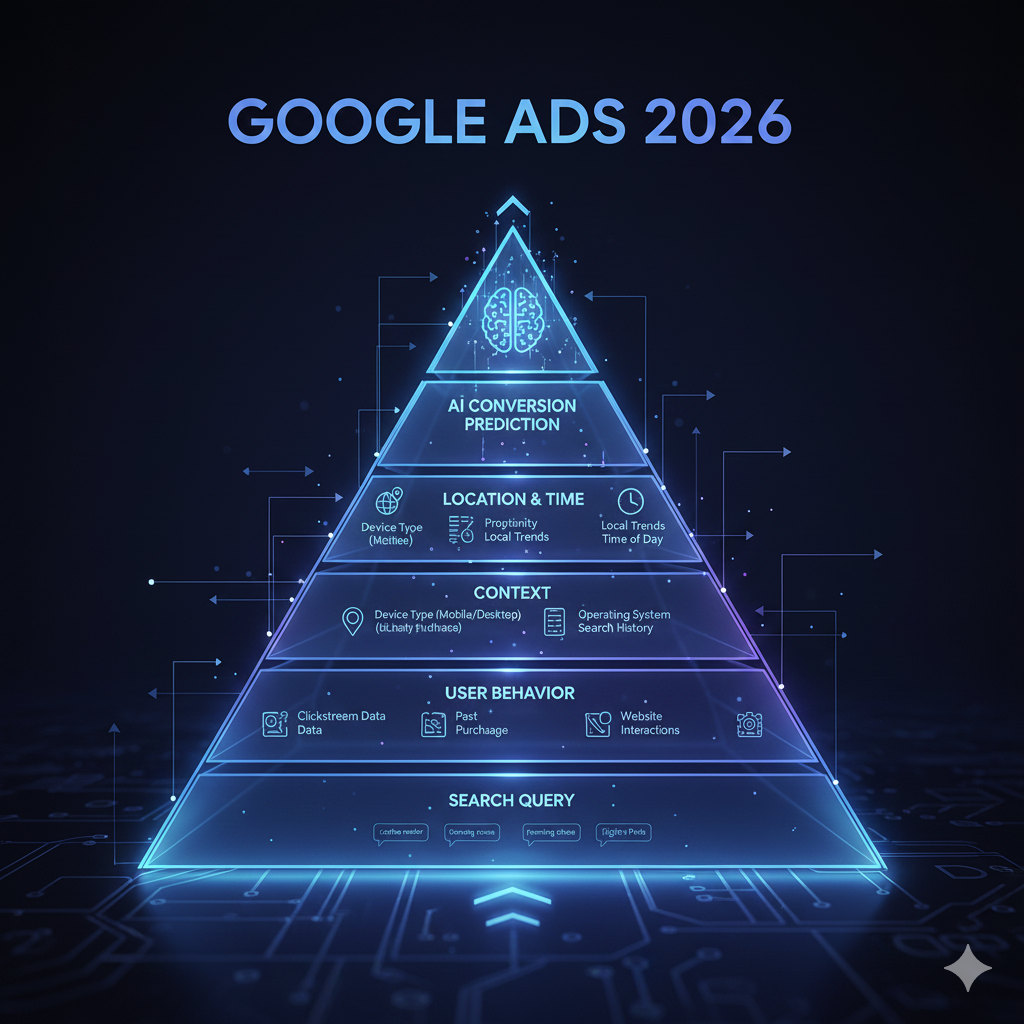
Google Ads 2026 operates on sophisticated intent signals that go far beyond matching search queries to keywords. The system analyzes multiple data points simultaneously:
Behavioral Intelligence: Google Ads 2026 tracks how users interact with content across the entire Google ecosystem. Previous searches, website visits, YouTube watching habits, and app usage all contribute to understanding what users want.
Contextual Analysis: The same search term means different things in different contexts. Google Ads 2026 considers the user’s recent activity, location, time of day, and even current events to interpret intent accurately.
Conversion Prediction: Using machine learning, Google Ads 2026 predicts which users are most likely to convert based on historical data from millions of advertisers. This predictive capability is what makes the new system so powerful.
Real-Time Optimization: Unlike manual keyword campaigns that require constant adjustments, Google Ads 2026 optimizes targeting in real-time based on performance data.
This approach requires a completely different mindset from traditional campaign management. Many businesses are partnering with experts—like the best digital marketing agency in Gurgaon—to navigate this complexity while maintaining campaign performance.
Performance Max: The Face of Google Ads 2026
Performance Max campaigns are the clearest example of Google Ads 2026 philosophy. Instead of creating keyword lists, advertisers provide:
Creative Assets: High-quality images, videos, headlines, and descriptions that the AI combines dynamically.
Conversion Goals: Clear definitions of business objectives—purchases, leads, sign-ups, or phone calls.
Audience Signals: Initial guidance about target customers that Google Ads 2026 uses as a starting point before expanding.
Business Data: Product feeds, service descriptions, unique value propositions, and market positioning.
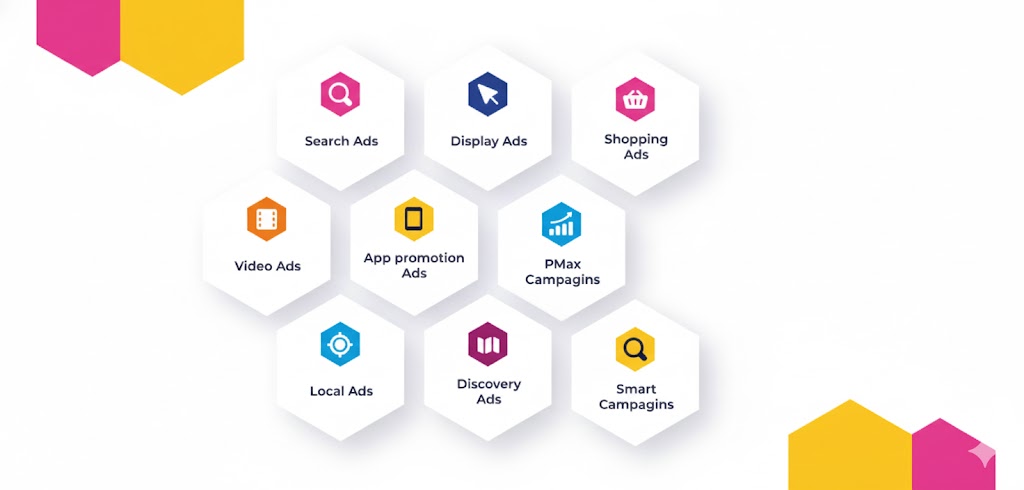
Google Ads 2026 then automatically places ads across Search, Display, YouTube, Gmail, and Discover. The system shows ads to users whose behavior and context suggest high conversion probability. This represents a massive shift in control from advertiser to algorithm.
The success of Performance Max in Google Ads 2026 depends on quality inputs. Garbage in, garbage out. Providing comprehensive data and excellent creative assets determines campaign performance more than any manual targeting decisions.
This evolution aligns with broader Google Ads trends 2026 toward automation, where strategic direction matters more than tactical execution.
Audience Targeting: The New Foundation of Google Ads 2026
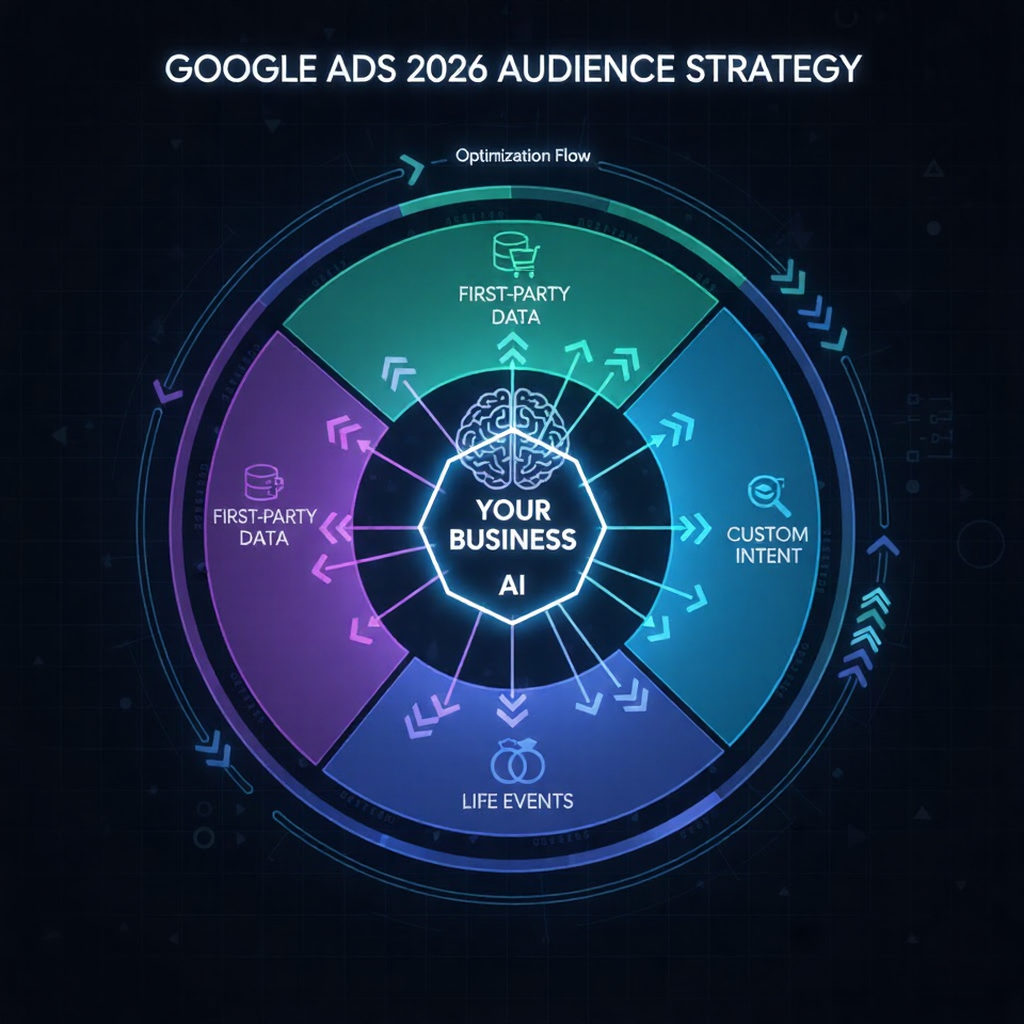
While keywords fade in importance, Google Ads 2026 makes audience targeting more critical than ever. The platform offers sophisticated audience options:
First-Party Data Integration: Your customer lists, website visitors, and CRM data provide the strongest signals for Google Ads 2026 targeting.
In-Market Audiences: Google Ads 2026 identifies users actively researching products or services in your category through their behavior patterns.
Affinity Audiences: Users with established, long-term interests aligned with your business offerings.
Life Event Targeting: Google Ads 2026 can reach people during major life changes—moving, getting married, starting businesses, or having children.
Custom Audiences: Built around topics, URLs, and apps related to your business, these audiences capture intent without traditional keywords.
The power of Google Ads 2026 audiences lies in behavioral signals rather than search terms. Someone visiting multiple competitor websites, watching comparison videos, and reading reviews shows much stronger intent than someone who simply searched once.
These audience strategies mirror approaches used in social media management and conversational marketing, where behavioral targeting outperforms demographic segmentation.
Essential Strategy Changes for Google Ads 2026 Success
Succeeding with Google Ads 2026 requires fundamental shifts in campaign management approach:
Prioritize Asset Quality: Since Google Ads 2026 handles targeting automatically, your creative assets become the primary competitive differentiator. Invest heavily in compelling visuals and copy.
Feed the Algorithm: Google Ads 2026 learns from conversion data. Implement comprehensive tracking, connect your CRM, and ensure the system understands what constitutes a valuable conversion.
Trust with Verification: Google Ads 2026 requires giving the AI room to optimize. However, monitor performance metrics closely and intervene when results consistently miss targets.
Optimize Landing Experience: With broader automated targeting in Google Ads 2026, landing pages must convert diverse visitor intents. Create pages that address multiple customer needs clearly.
Think Omnichannel: Google Ads 2026 campaigns span multiple Google properties. Your messaging needs to work across Search, Display, YouTube, and Discovery simultaneously.
Working with experienced professionals—whether the best digital marketing agency in Gurgaon or elsewhere—can accelerate your Google Ads 2026 adaptation while avoiding costly mistakes.
These strategies align with top Google Ads marketing strategies that emphasize holistic campaign management over isolated tactics.
Measuring Performance in Google Ads 2026
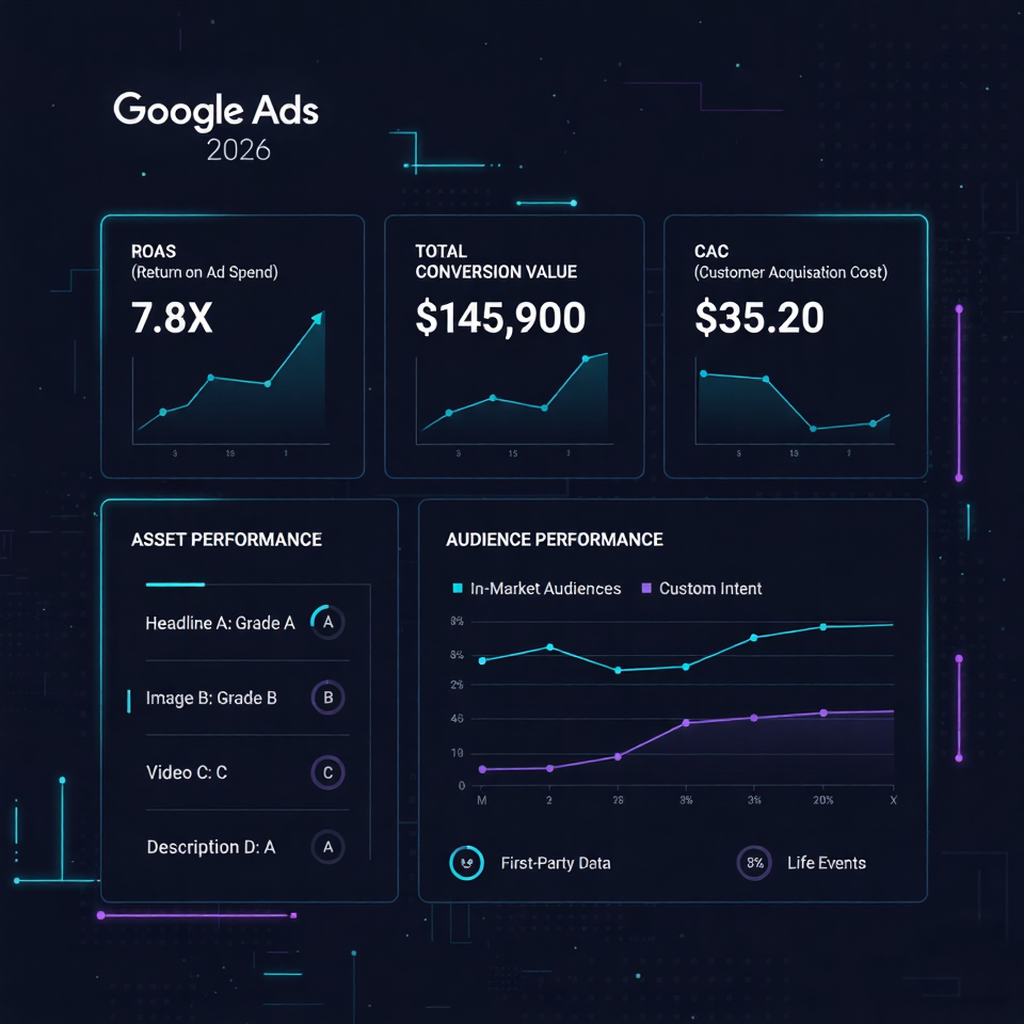
Traditional metrics become less relevant in Google Ads 2026. Forget keyword-level Quality Scores and average positions. Focus instead on:
Conversion Value: The actual revenue or lead value generated by Google Ads 2026 campaigns, not just clicks or impressions.
Return on Ad Spend (ROAS): Measuring the efficiency of Google Ads 2026 investments relative to business outcomes.
Customer Acquisition Cost (CAC): Understanding what you pay to acquire customers through Google Ads 2026 compared to other channels.
Asset Performance: Identifying which headlines, images, and videos drive the best results in Google Ads 2026 campaigns.
Audience Insights: Discovering which audience segments convert at the highest rates through Google Ads 2026 targeting.
Google Ads 2026 reporting provides these insights, but interpreting AI-driven data requires expertise in both technology and marketing fundamentals. This is where specialized knowledge from a best digital marketing agency in Gurgaon becomes invaluable.
The Hybrid Approach: Balancing Old and New in Google Ads 2026
Despite revolutionary changes, Google Ads 2026 hasn’t completely eliminated keywords from every scenario. Smart advertisers use a hybrid strategy:
Brand Protection Campaigns: Traditional keyword campaigns still protect your brand name in Google Ads 2026, capturing high-intent searches for your specific business.
Competitive Targeting: Bidding on competitor terms works effectively in Google Ads 2026, though now managed better through custom audiences and intent signals.
Research Insights: Keyword research still provides valuable understanding of customer language and concerns, informing Google Ads 2026 creative development.
Negative Keywords: These remain crucial in Google Ads 2026 for preventing wasted spend on irrelevant searches.
The most successful Google Ads 2026 approach combines automated Performance Max campaigns with selective keyword campaigns for specific strategic purposes. This mirrors strategies in Facebook advertising where automation balances with strategic oversight.
Industry-Specific Implications of Google Ads 2026
Different sectors experience Google Ads 2026 transformation differently:
E-Commerce Businesses: Google Ads 2026 heavily favors online retailers with strong product data feeds and visual assets. Shopping campaigns now blend seamlessly across all Google properties.
Local Service Providers: Businesses targeting local customers benefit from Google Ads 2026 location-based intent signals but need compelling landing pages for broader audience targeting.
B2B Companies: Longer sales cycles in Google Ads 2026 require sophisticated audience nurturing and comprehensive conversion tracking to feed the AI meaningful data.
Professional Services: Agencies, consultants, and coaches using Google Ads 2026 need strong brand positioning and educational content to convert broader targeting effectively.
For businesses in competitive markets—whether you’re promoting services as the best digital marketing agency in Gurgaon or any other offering—the quality of your entire marketing ecosystem matters more than individual campaign tactics in Google Ads 2026.
Common Google Ads 2026 Mistakes to Avoid
As advertisers adapt to Google Ads 2026, several common pitfalls have emerged:
Insufficient Conversion Data: Google Ads 2026 AI-driven campaigns need at least 30-50 conversions monthly to optimize effectively. Without sufficient data, algorithms struggle to learn.
Over-Restricting the System: Setting overly tight budget caps, audience restrictions, or geographic limitations prevents Google Ads 2026 from finding optimal targeting opportunities.
Neglecting Creative Quality: When Google Ads 2026 handles targeting automatically, poor creative becomes your primary performance limitation.
Impatience: Google Ads 2026 campaigns typically need 2-4 weeks to optimize. Constant changes reset the learning process and hurt performance.
Ignoring Exclusions: While Google Ads 2026 is sophisticated, you still need to exclude irrelevant placements, audiences, and search terms.
These mistakes often stem from applying old mental models to new systems. Just as AI tools for e-commerce require different thinking than traditional retail, Google Ads 2026 demands fresh approaches.
The Future Beyond Google Ads 2026
Looking past Google Ads 2026, the platform will likely become even more automated and intelligent. Emerging trends include:
Generative AI for Ad Creation: Google Ads 2026 is testing AI that generates ad copy and images automatically based on product data and business goals.
Predictive Bidding: Moving beyond reactive optimization, future Google Ads 2026 versions will predict conversion opportunities before users even search.
Cross-Channel Attribution: Better understanding of how different Google Ads 2026 placements across properties work together to drive conversions.
Privacy-Compliant Targeting: As third-party cookies disappear, Google Ads 2026 first-party data and AI modeling become even more valuable for effective targeting.
These trends suggest that advertiser roles will continue shifting from tactical campaign management to strategic direction, creative excellence, and data interpretation—skills that effective digital marketing strategies have always emphasized.
Working Successfully with Google Ads 2026
For many businesses, adapting to Google Ads 2026 means working with specialists who understand both the technology and marketing principles. The best digital marketing agency in Gurgaon (or anywhere) can provide:
Strategic Planning: Aligning Google Ads 2026 campaigns with broader business objectives and market positioning.
Creative Development: Producing the high-quality assets that Google Ads campaigns require for optimal performance.
Data Integration: Properly connecting CRM systems, analytics platforms, and conversion tracking for Google Ads optimization.
Performance Analysis: Interpreting Google Ads AI-driven results and adjusting strategy based on meaningful insights.
Testing Frameworks: Systematically improving Google Ads campaigns through controlled experimentation and iteration.
Whether you manage Google Ads 2026 in-house or work with an agency, success requires embracing the new paradigm while maintaining core marketing fundamentals.
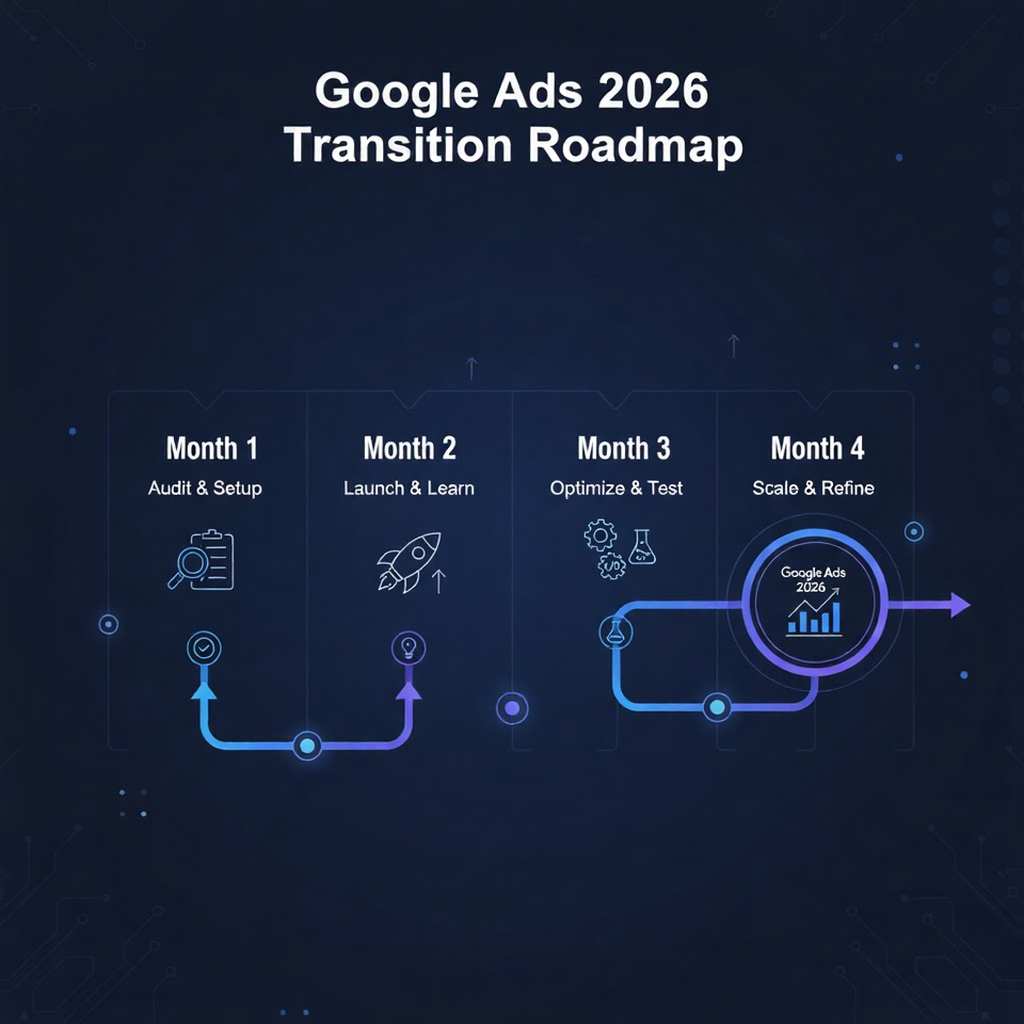
Practical Steps to Start with Google Ads 2026
If you’re ready to transition to Google Ads 2026 targeting model, follow these implementation steps:
Audit Current Campaigns: Identify which existing campaigns could benefit from Google Ads 2026 automation and which should remain keyword-focused.
Improve Conversion Tracking: Ensure every valuable action is properly tracked in Google Ads 2026 and assigned appropriate values.
Develop Creative Library: Create comprehensive collections of high-quality images, videos, headlines, and descriptions for Google Ads 2026 campaigns.
Start Small: Launch a Performance Max campaign in Google Ads 2026 with limited budget while maintaining existing campaigns.
Monitor and Learn: Give the Google Ads 2026 AI time to optimize while tracking performance against your baseline campaigns.
Scale Gradually: As you build confidence with Google Ads 2026 results, shift more budget to intent-based campaigns.
This measured approach minimizes risk while allowing you to learn Google Ads 2026 systems. It’s similar to how life coaches are adapting digital strategies—testing new approaches while maintaining proven methods.
Real-World Success with Google Ads 2026
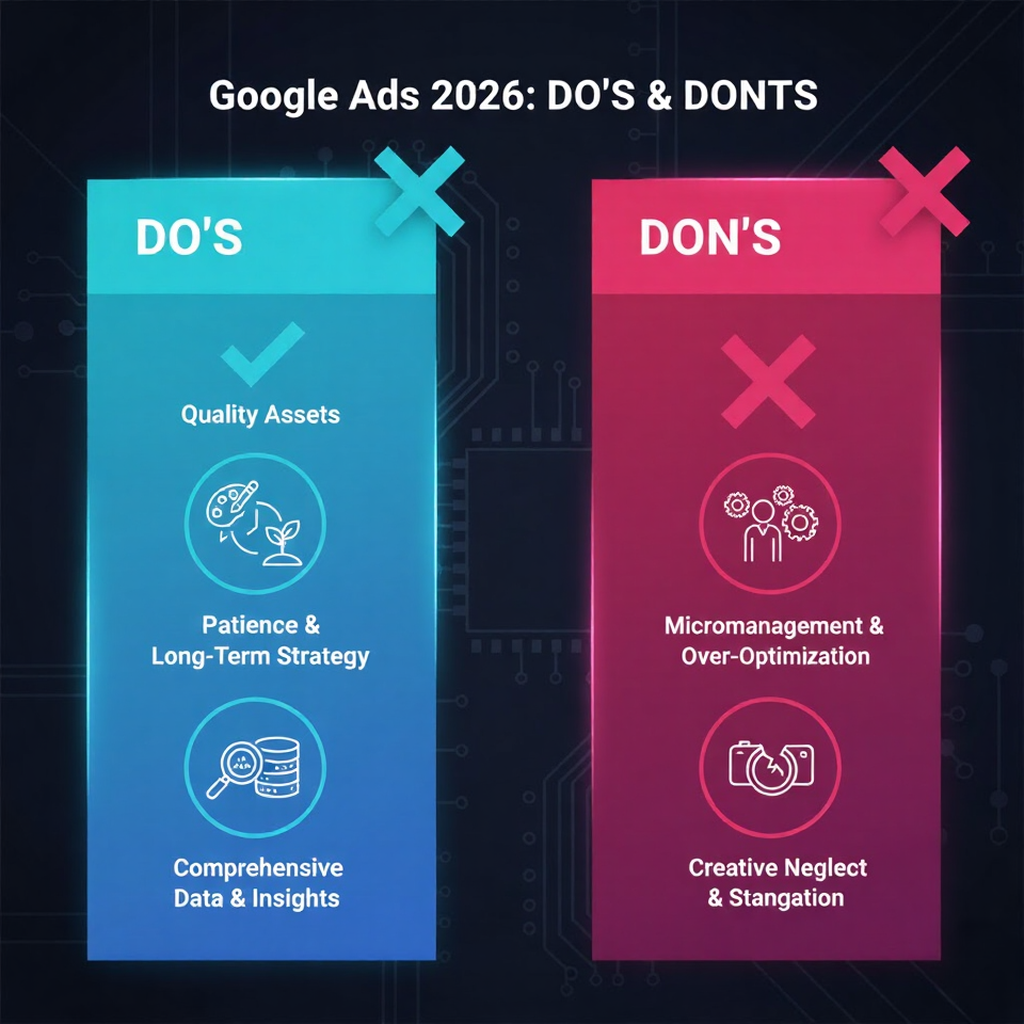
Businesses that have successfully adapted to Google Ads 2026 share common characteristics. They invest in quality creative assets, provide comprehensive conversion data, and resist the urge to micromanage AI optimization.
One pattern emerging from Google Ads 2026 success stories: Companies that combine platform expertise with strong marketing fundamentals consistently outperform those focused solely on technical tactics. This is why many businesses choose to work with the best digital marketing agency in Gurgaon rather than trying to master Google Ads 2026 complexity internally.
The most successful Google Ads 2026 advertisers also maintain realistic expectations. While the AI is powerful, it’s not magic. Results still depend on product-market fit, competitive positioning, pricing, and overall business fundamentals.
Integration with Broader Marketing Strategy
Google Ads 2026 doesn’t exist in isolation. The most effective campaigns integrate with comprehensive marketing strategies that include:
SEO and Content Marketing: Organic search efforts that complement Google Ads 2026 paid campaigns and provide conversion data.
Social Media Marketing: Building brand awareness that makes Google Ads 2026 campaigns more effective when users encounter your ads.
Email Marketing: Nurturing leads generated through Google Ads 2026 and providing conversion data back to the platform.
Landing Page Optimization: Creating experiences that convert the diverse traffic Google Ads 2026 delivers through intent-based targeting.
This holistic approach is why the best digital marketing agency in Gurgaon doesn’t focus exclusively on Google Ads 2026 but integrates paid advertising with all other marketing channels for maximum impact.
The synergy between various digital marketing strategies creates compounding returns that isolated Google Ads 2026 campaigns cannot achieve alone.
Conclusion: Embracing the Google Ads 2026 Revolution
The transformation of Google Ads 2026 from keyword-based to intent-driven targeting represents both challenge and opportunity. While it requires learning new skills and approaches, it also promises better results with less manual work—for those who adapt properly.
Success with Google Ads 2026 comes down to three factors: Embracing AI-powered automation, focusing on creative quality and conversion optimization, and maintaining strategic oversight while trusting the algorithm. Whether you’re managing Google Ads 2026 campaigns yourself or working with the best digital marketing agency in Gurgaon, understanding and implementing the new targeting model isn’t optional anymore.
The future belongs to advertisers who recognize that Google Ads 2026 isn’t just an update—it’s a complete paradigm shift. Traditional keyword strategies will become increasingly ineffective as AI-driven, intent-focused campaigns dominate the advertising landscape.
Start your Google Ads 2026 transition today by evaluating current strategy against these new realities. The sooner you begin the journey, the sooner you’ll experience the superior results that Google Ads 2026 delivers to those who master its AI-powered targeting model.
The question isn’t whether to adapt to Google Ads 2026—it’s how quickly you can make the transition and start benefiting from the most powerful advertising platform ever created.