
The landscape of online search has undergone a seismic transformation. Traditional search engines are no longer the gatekeepers of information they once were. AI search engines have emerged as powerful alternatives, fundamentally changing how users discover, consume, and interact with content. This shift isn’t just technological—it’s behavioral, strategic, and permanent. For marketers, content creators, and businesses, understanding Generative Engine Optimization (GEO) is no longer optional. It’s the difference between being visible in the AI-powered future of search and becoming digitally invisible.
1. Introduction: Why Search Is No Longer the Same
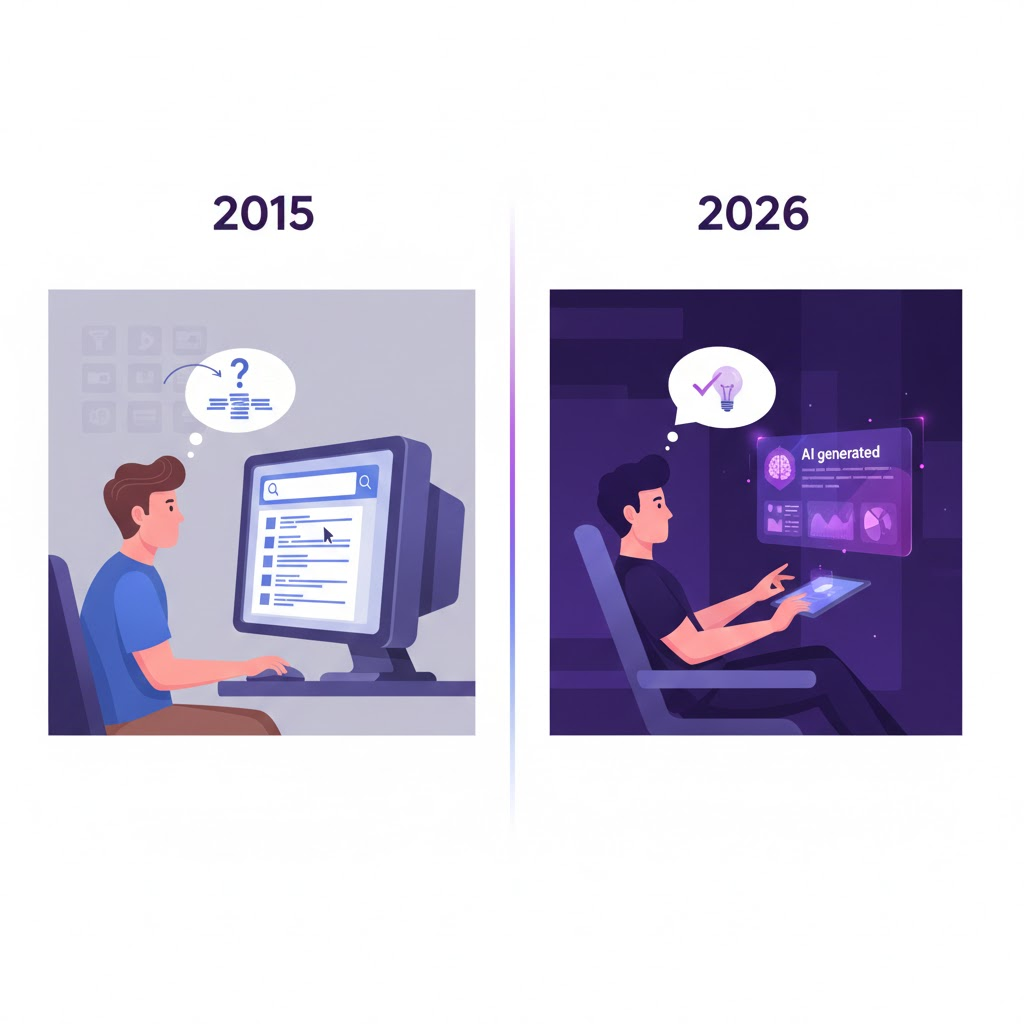
Remember when finding information online meant typing keywords into Google and scrolling through pages of blue links? That era is rapidly fading. For decades, search engine optimization revolved around ranking on the first page, earning clicks, and driving traffic. Users would click multiple links, compare sources, and piece together answers themselves.
Today, AI search engines like ChatGPT, Perplexity, Google’s AI Overviews, and Bing’s Copilot are changing the game entirely. Instead of presenting a list of links, these platforms generate direct answers by synthesizing information from multiple sources. Users get comprehensive responses without clicking anything at all. This fundamental shift from “links to clicks” to “questions to answers” represents the biggest disruption in search since Google’s inception.
For marketers and businesses, this creates both a challenge and an opportunity. Traditional SEO metrics like click-through rates and page rankings are becoming less relevant when users never leave the AI interface. The new currency is citation, mention, and authority within AI-generated responses. Understanding what is search engine optimization in this new context and how GEO extends it is now critical for digital survival and growth.
2. What Is GEO (Generative Engine Optimization)?
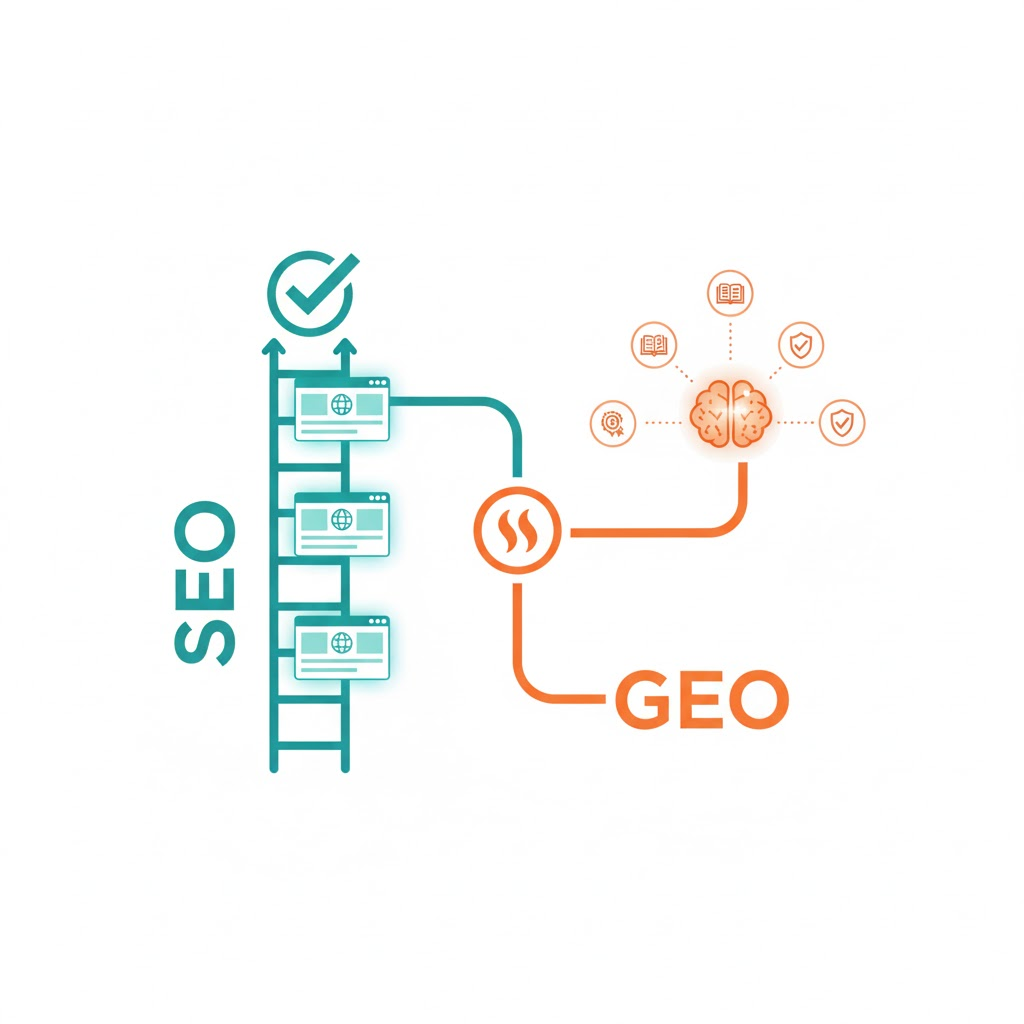
Generative Engine Optimization (GEO) is the practice of optimizing your content so that AI search engines and large language models cite, reference, and include your information in their generated responses. Unlike traditional SEO, which focuses on ranking in search results, GEO focuses on being the source AI models trust and use when answering user queries.
The core difference between SEO and GEO lies in the end goal. SEO aims to drive organic traffic by ranking high in search engine results pages (SERPs). Success is measured in clicks, impressions, and website visits. GEO, on the other hand, aims to achieve visibility and authority within AI-generated answers, even if users never click through to your site. Success is measured in mentions, citations, and influence over AI responses.
Importantly, GEO is not replacing SEO—it’s extending it. Search engines still exist and still drive massive traffic. However, as AI search engines become more prevalent and users increasingly prefer instant AI-generated answers, businesses need both strategies working in harmony. SEO tips for new entrepreneurs remain foundational, while GEO ensures your brand stays relevant as search evolves.
3. From Clicks to Answers: The Biggest Shift in Search
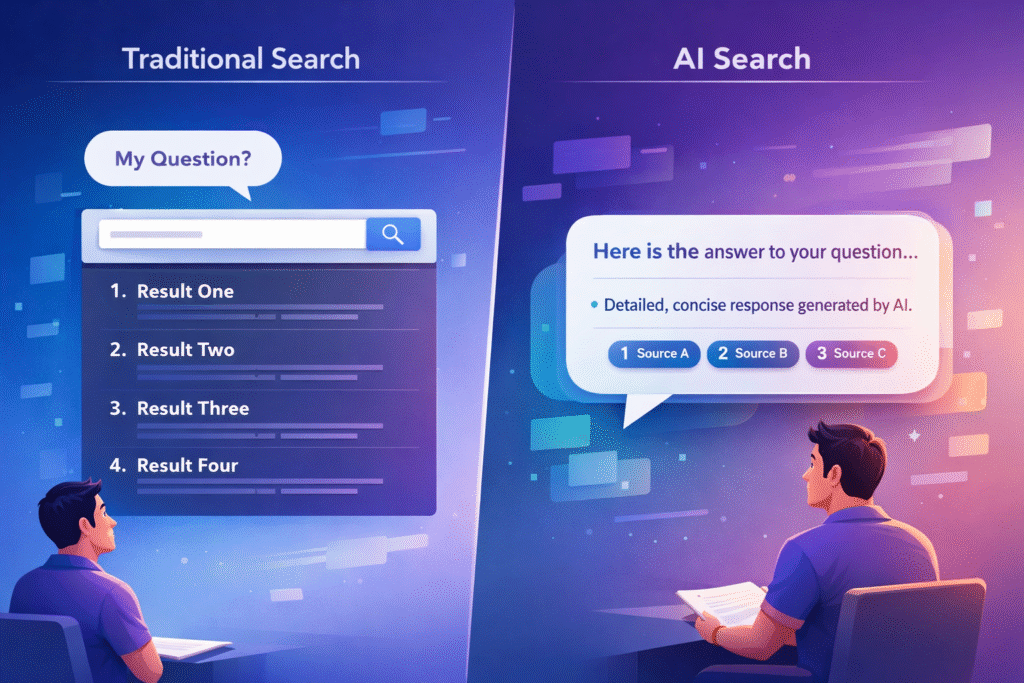
The rise of zero-click searches represents one of the most significant changes in how information is consumed online. A zero-click search occurs when a user’s query is answered directly on the search results page or within an AI interface, eliminating the need to click through to a website. Google’s featured snippets, knowledge panels, and AI Overviews have been driving this trend for years, but AI search engines have accelerated it dramatically.
AI summaries and instant answers are now the norm, not the exception. When someone asks an AI search engine about complex topics, they receive synthesized, contextual responses that pull from dozens of sources simultaneously. The AI doesn’t just point to information—it processes, interprets, and presents it in a digestible format. Users get exactly what they need without visiting multiple websites, comparing information, or reading through lengthy articles.
This shift fundamentally changes what “visibility” means in digital marketing. Understanding zero-click SEO strategies becomes essential as visibility now means being the source AI platforms reference and trust. Your content might drive zero direct traffic but still influence thousands of purchasing decisions if AI search engines consistently cite your brand as an authority.
4. How People Actually Use AI Tools Today

The way people interact with AI search engines differs fundamentally from traditional search behavior. Traditional search intent was about finding information—users wanted links to relevant pages. AI intent is about outcomes—users want plans, recommendations, comparisons, and decisions made easier. This represents a shift from information retrieval to task completion.
Users are asking AI search engines to plan entire vacations, write personalized emails, compare products with nuanced criteria, and help them make complex purchasing decisions. They’re using AI as a research assistant, writing partner, strategic advisor, and decision-making tool all in one. This behavioral shift means content creators must think beyond keywords and rankings.
For brands, this means rethinking content strategy entirely. Instead of creating content solely to rank for specific keywords, you need content that AI can confidently reference when making recommendations. This requires clarity, authority, factual accuracy, and unique insights that AI models can extract and present. Brands that understand how to optimize content for AI search engines are already positioning themselves as the trusted sources AI platforms cite repeatedly.
5. The New AI Ecosystem: Not All Models Work the Same
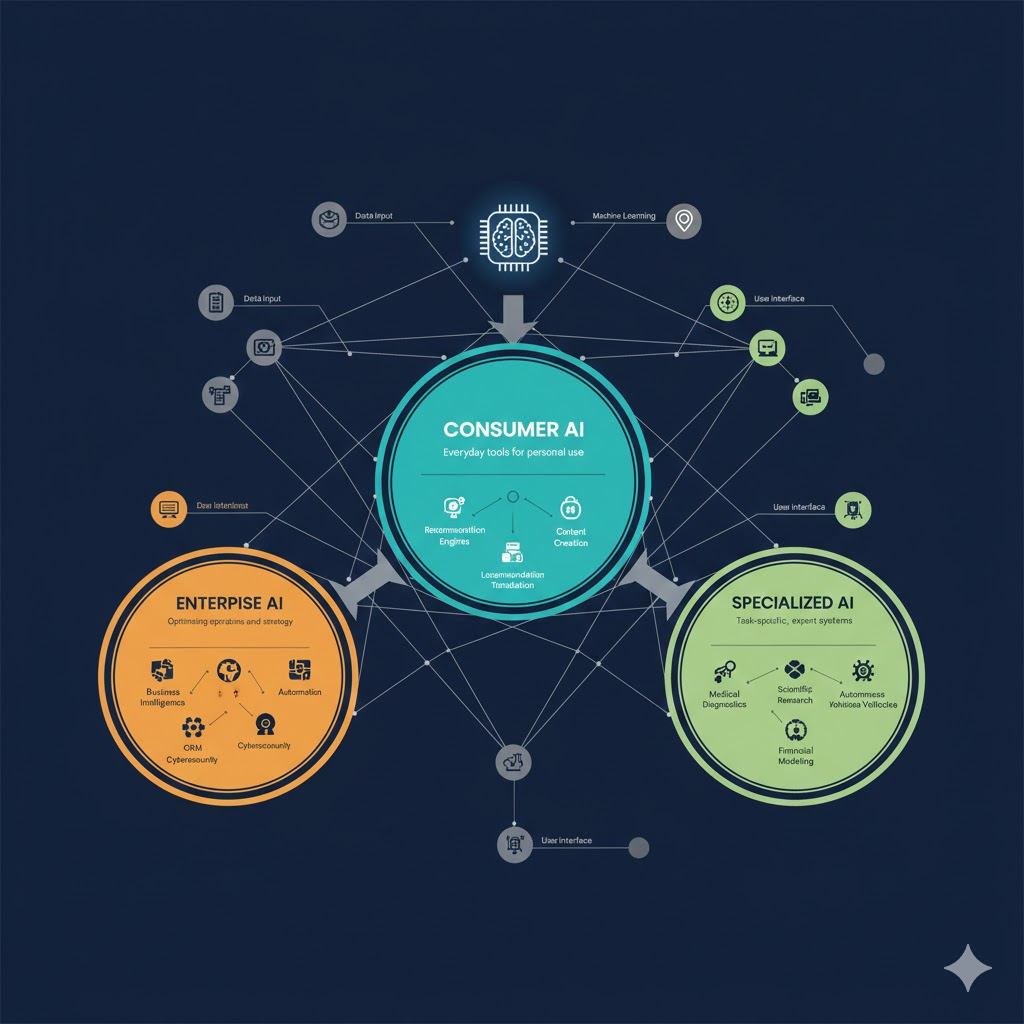
The AI search ecosystem isn’t monolithic—different AI models serve different purposes and pull information differently. Consumer-facing AI search engines like ChatGPT, Perplexity, and Google Gemini prioritize conversational answers and general knowledge. Enterprise AI systems, on the other hand, prioritize accuracy, verifiable sources, and industry-specific expertise. Understanding these distinctions is crucial for effective GEO.
Consumer AI tools often prioritize clarity and accessibility, making them ideal for answering broad questions and providing general guidance. They synthesize information from publicly available content and present it in user-friendly formats. Enterprise AI systems, however, are designed for specialized tasks—legal research, medical diagnostics, financial analysis—and require highly structured, authoritative, and verifiable information.
This means one content strategy doesn’t fit all AI platforms. To maximize GEO effectiveness, brands need structured, reliable information that serves both consumer and enterprise AI needs. Learning about the future of AI and automation helps businesses understand how to position their content for maximum AI visibility across different platforms.
6. Why Mentions Matter More Than Backlinks Now
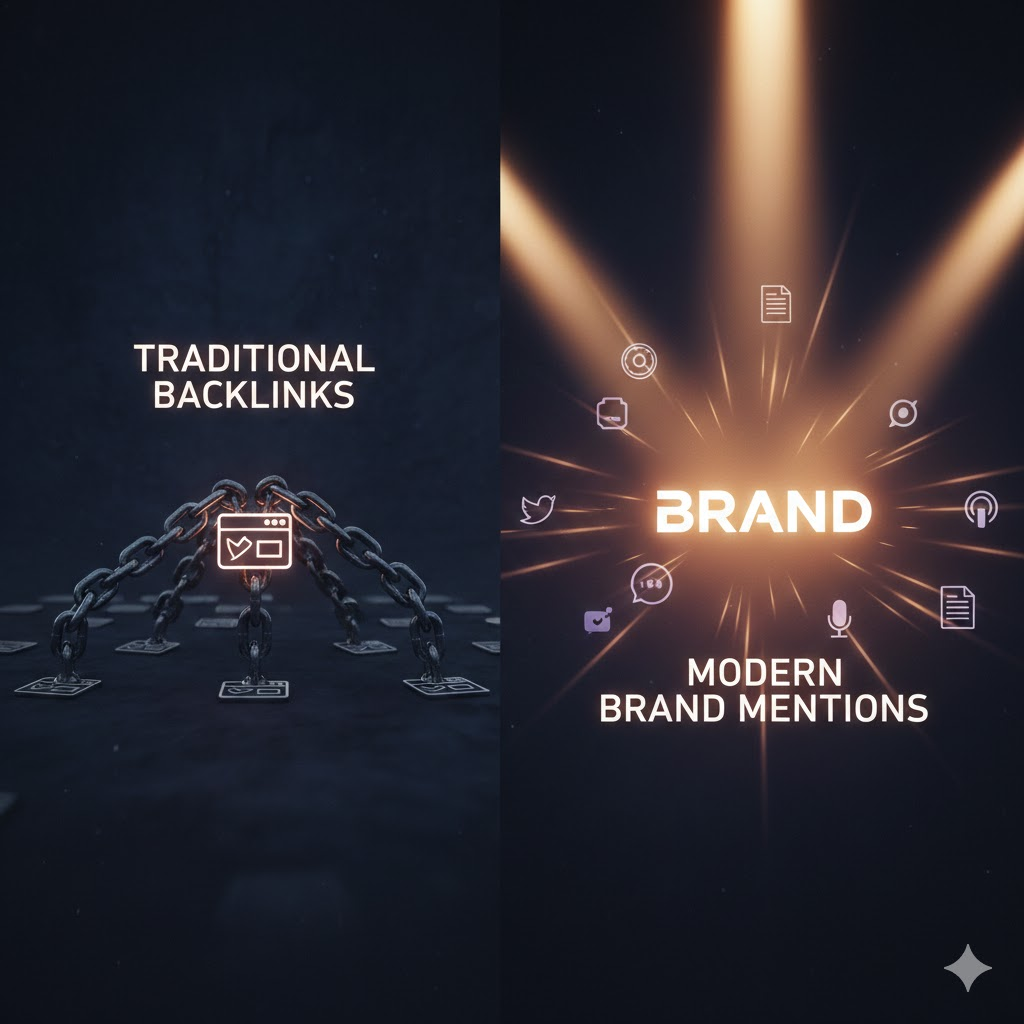
For years, backlinks have been the cornerstone of SEO—the more high-quality sites linking to you, the higher your authority and rankings. But in the AI search era, brand mentions and citations are becoming equally, if not more, important. AI search engines don’t necessarily follow backlinks the way traditional search engines do; they analyze content contextually and reference sources based on authority, relevance, and trustworthiness.
Traditional ranking signals like domain authority and PageRank matter less when AI is synthesizing answers rather than ranking pages. Instead, AI models look for consistent mentions across authoritative sources, clear attribution of ideas, and demonstrated expertise in specific domains. If your brand is frequently cited in reputable content, discussed in industry contexts, and mentioned alongside established authorities, AI systems will increasingly reference you.
How do AI search engines choose which sources to cite? They prioritize content that demonstrates expertise through original research, unique insights, verifiable data, and clear authorship. They favor sources that are frequently mentioned in trusted contexts, have consistent messaging across platforms, and provide information in structured, easy-to-parse formats. Implementing on-page SEO techniques alongside GEO strategies helps establish the authority signals AI models look for.
7. How to Optimize Content for GEO
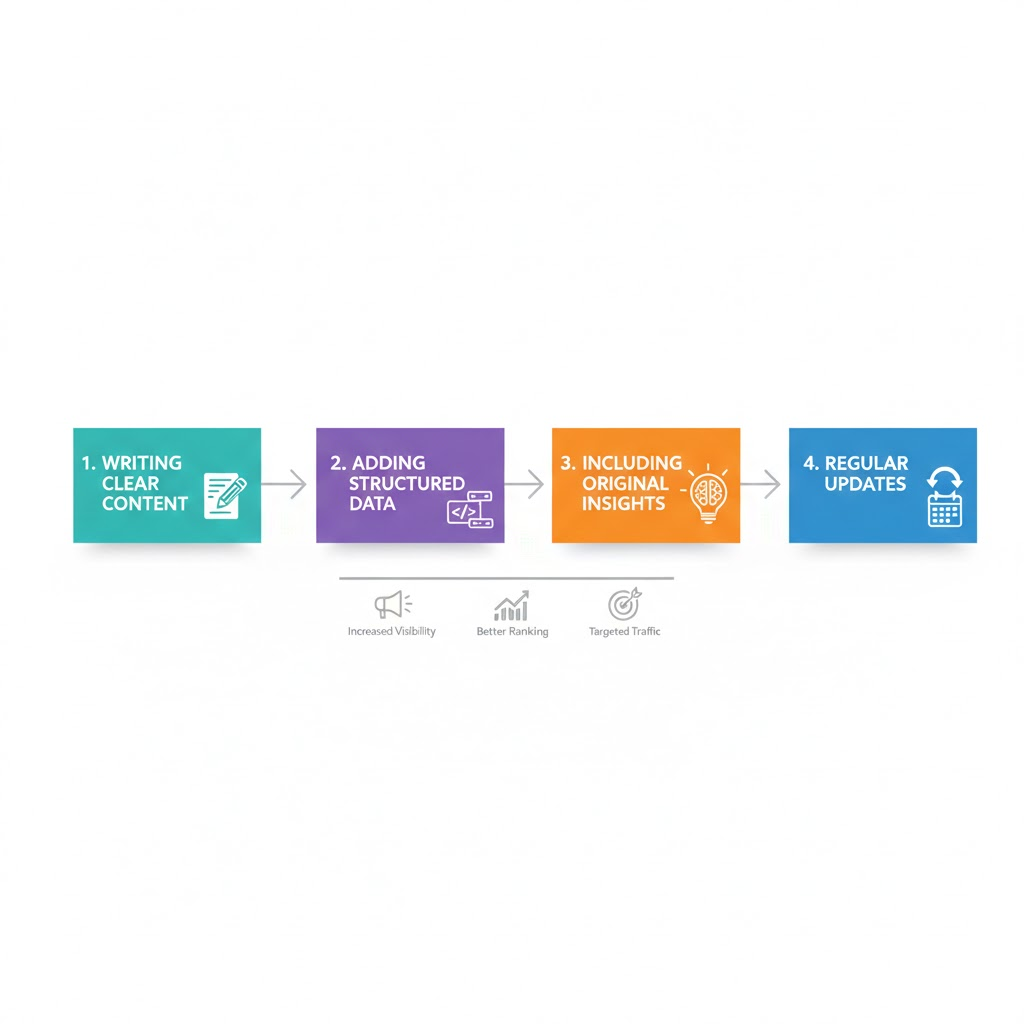
Optimizing content for AI search engines requires a fundamentally different approach than traditional SEO. The core principle is creating content that AI can confidently extract, synthesize, and present as trustworthy information. This starts with writing clear, factual, and well-structured content that directly answers questions without unnecessary fluff or keyword stuffing.
Original insights and real-world examples are critical for GEO success. AI models are increasingly sophisticated at identifying generic, rehashed content versus genuine expertise and unique perspectives. Share case studies, proprietary research, industry data, and firsthand experiences that AI platforms can’t find elsewhere. This differentiation makes your content more valuable and more likely to be cited.
Creating reusable content blocks is another powerful GEO strategy. Structure your content with clear headings, concise definitions, bullet-pointed key takeaways, and standalone sections that AI can extract independently. Think of each section as a potential answer snippet that could be pulled into an AI-generated response. Understanding canonical tags and proper content structure helps AI better understand your content’s hierarchy.
Finally, updating content regularly signals to AI search engines that your information is current and reliable. Outdated content loses authority quickly in the AI ecosystem. Regular updates with fresh data, new examples, and evolving perspectives keep your content relevant and citable. Following voice search SEO practices also helps, as conversational AI queries align closely with voice search patterns.
8. GEO and SEO: How They Work Together
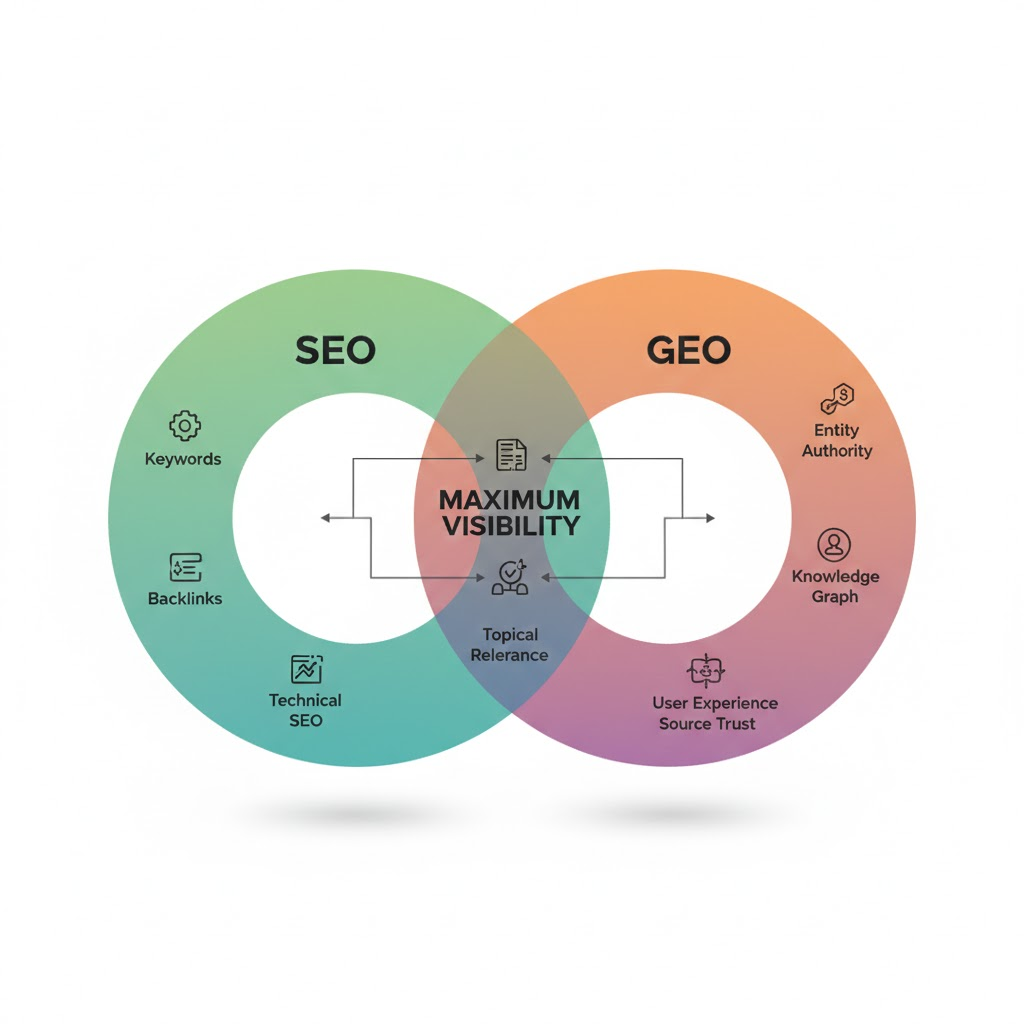
Despite the rise of AI search engines, traditional SEO remains essential for discovery and initial visibility. Search engines still drive billions of queries daily, and ranking well in traditional search results is how most users first discover brands and content. SEO gets you found; GEO keeps you relevant once AI becomes the primary interface between users and information.
GEO is needed specifically for AI visibility—ensuring that when users ask AI search engines questions related to your expertise, your brand is cited, mentioned, and recommended. These two strategies aren’t competing; they’re complementary. Strong SEO brings traffic and establishes your online presence. Strong GEO ensures AI platforms recognize you as an authority and reference your insights repeatedly.
The most effective approach is a combined strategy that leverages both. Optimize your content for traditional search engines with solid technical SEO, keyword targeting, and backlink building. Simultaneously, optimize for AI search engines with clear structure, authoritative insights, and factual accuracy. Implementing digital marketing strategies that encompass both SEO and GEO maximizes your visibility across the entire search ecosystem.
9. Future of Search in the Age of AI

The future of search is AI-first, and businesses that adapt early will gain significant competitive advantages. As AI search engines become more sophisticated and widely adopted, they’ll become the default way people discover products, make decisions, and consume information. Traditional search won’t disappear, but it will increasingly serve as a secondary discovery mechanism while AI handles the primary question-answering and recommendation functions.
Early adopters who invest in GEO now will build compounding authority that’s difficult for competitors to replicate later. Just as businesses that mastered SEO early in the internet era gained lasting advantages, those who master GEO in the AI era will establish themselves as the default authorities AI platforms reference. This first-mover advantage is significant because AI models learn from patterns—the more frequently you’re cited, the more likely you are to be cited in the future.
The long-term impact on digital marketing will be profound. Metrics will shift from traffic-focused to influence-focused. Success will be measured not just by how many people visit your site, but by how many decisions your brand influences through AI citations and mentions. Understanding Google Ads trends for 2026 and how they integrate with AI search patterns will be crucial. Content strategies will prioritize authority, expertise, and unique value over volume and keyword targeting.
10. Conclusion: Adapting Before It’s Too Late

The shift to AI-powered search isn’t coming—it’s already here. AI search engines are fundamentally changing how people discover information, make decisions, and interact with brands. GEO represents the next evolution of digital marketing, and businesses that ignore this shift risk becoming invisible in the very platforms their customers increasingly rely on.
The key takeaway is simple: start optimizing for AI visibility now. Focus on creating authoritative, well-structured, factual content that AI platforms can trust and cite. Build your reputation as a reliable source through original insights and consistent expertise. Whether you’re exploring growth marketing strategies or refining your paid advertising approach, combining GEO with traditional SEO ensures comprehensive search visibility.
The brands that rethink their content strategy today—moving from traffic obsession to authority building, from keyword targeting to insight sharing, from link building to mention earning—will be the ones AI search engines recommend tomorrow. The question isn’t whether to adapt to this new reality, but how quickly you can position your brand as the authority AI platforms cite when your customers ask questions. The future of search is generative, and the time to optimize for it is now.