
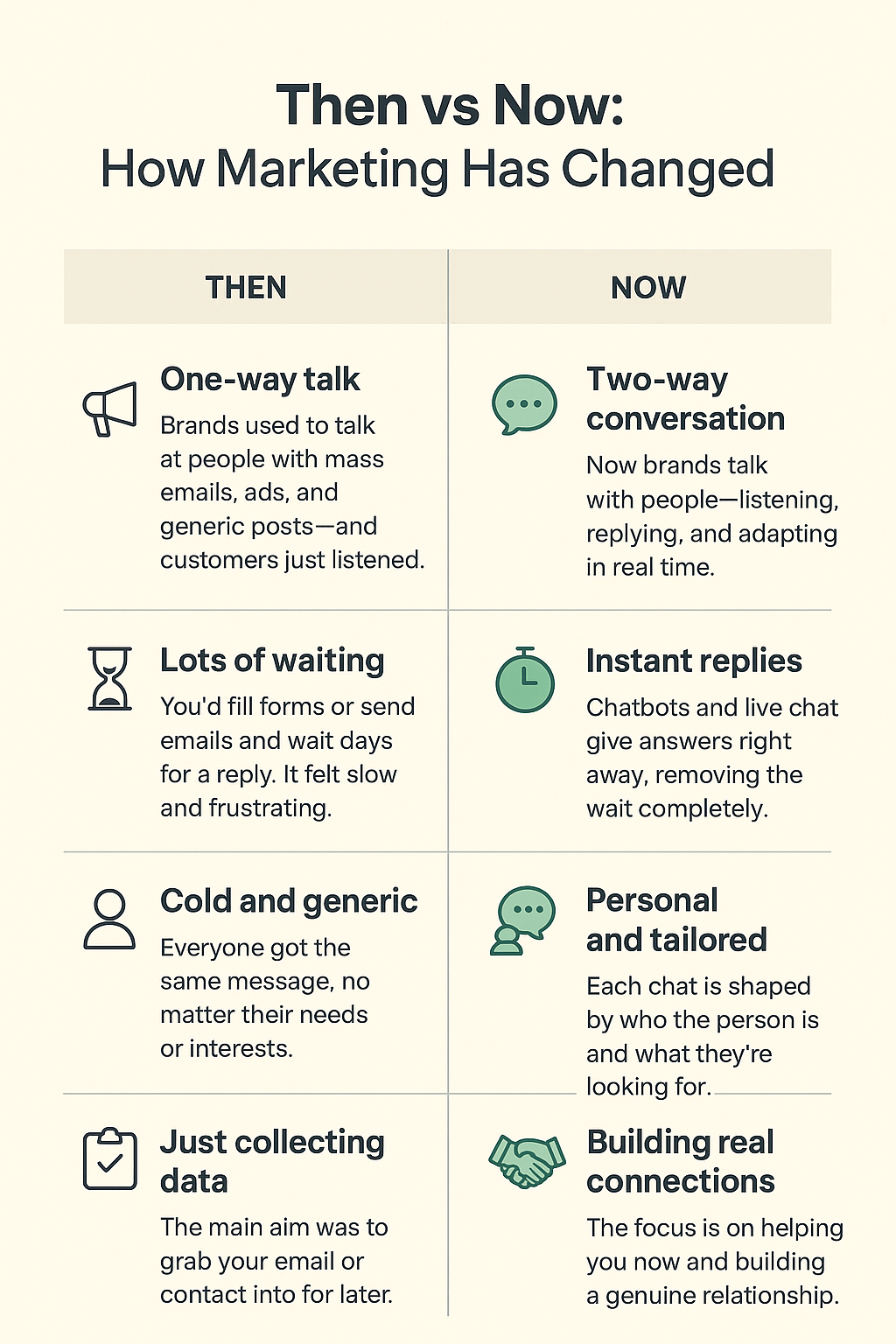
Not too long ago, reaching out to a brand meant having a lot of patience. You’d fill out a “Contact Us” form, send it off, and wait days hoping someone would reply. Or you’d call, get stuck in endless menu options, and then sit on hold forever. Back then, marketing felt like a one-way street — companies talked, and customers just had to listen and wait. “That world is gone now.”
Today, we’re in the age of conversation. Instead of waiting around, people want real-time, one-on-one interactions with brands. This is what conversational marketing is all about — treating every digital interaction as a chance to talk with someone, not at them. It’s about building real connections, earning trust, and growing relationships by simply having better conversations.
This definitive guide will navigate you through the entire conversational marketing ecosystem. We will explore its foundational principles, dissect the business-critical benefits that make it a modern necessity, and provide a practical, actionable framework for implementing a powerful conversational strategy that delivers measurable results.
1. What is Conversational Marketing? A Foundational Definition
At its core, conversational marketing is simply about having real, two-way conversations with customers. It’s a customer-focused approach that uses feedback to guide meaningful, one-on-one interactions across different digital platforms. The goal is to move away from cold, robotic messages and bring back the warmth and personal touch of a real human conversation.
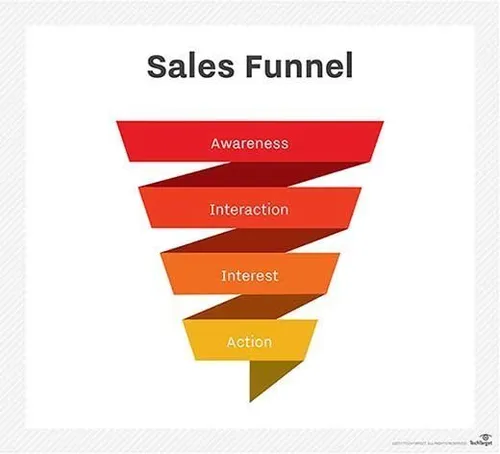
Think of it like this: imagine your best product expert, your most caring support agent, and your sharpest sales rep are all on your website 24/7. The moment a visitor shows interest or seems confused, they’re there — not with a copy-pasted script, but with a helpful, relevant, and personalized response. That’s what conversational marketing promises: connecting with people in the exact moment they need you, instead of forcing them through rigid, pre-planned funnels.
To see just how big of a shift this is, it helps to compare it directly with traditional digital marketing methods.
2. Why Conversational Marketing is No Longer an Option, But a Necessity
Today’s customers live in the “NOW” economy. We’re used to getting what we want instantly — streaming on Netflix, booking an Uber in minutes, or getting next-day delivery from Amazon. We chat with friends instantly, and we expect brands to respond just as quickly. So when a company takes 24 hours to answer an email, it feels old-fashioned and dismissive of our time.
This change in expectations is why conversational marketing has gone from being a nice extra to a core part of how businesses operate. And the reason companies are adopting it isn’t theory — it’s the clear, measurable results it brings.
A superior customer experience, fostered by instant engagement, has a direct impact on key user behavior metrics like time on page and bounce rate. These are crucial signals that search engines use to rank content, making conversational marketing a powerful, albeit indirect, tool in your SEO: The Ultimate Guide to achieving higher visibility.
Faster Sales Cycles:
In today’s crowded market, customer experience is one of the only lasting ways to stand out. People want to feel heard, understood, and valued. Instead of digging through endless help pages, a chatbot can understand what they need and guide them straight to the answer. Turning a moment of frustration into a smooth, helpful experience leaves a lasting positive impression.
A Quantum Leap in Customer Experience (CX):
Great customer experience is one of the few lasting ways to stand out in today’s crowded market. It’s built on making people feel heard, understood, and valued — and this is where conversational marketing shines.
Instead of forcing frustrated users to dig through endless help articles for answers, an intelligent chatbot can understand their questions in plain language and guide them straight to the right solution. What could have been a moment of frustration becomes a quick, smooth experience that leaves them with a positive emotional connection to your brand.

Cultivating Deep Customer Loyalty and Increasing Lifetime Value:
Customer loyalty isn’t earned through one-time transactions — it’s built through ongoing relationships. When brands consistently engage in helpful, empathetic, and meaningful two-way conversations, they move beyond just selling and start building real connections.
When customers feel like a brand is genuinely invested in their success, they’re far more likely to stay loyal, spend more over time, and actively recommend that brand to others. The long-term revenue from loyal customers can easily outweigh the initial cost of setting up the tools and processes needed to support them.
Unlocking a Goldmine of Zero-Party and First-Party Data:
Every conversation with a customer is also a valuable source of data. Unlike third-party data, which is often vague or outdated, conversational data is direct, accurate, and becoming more important as privacy rules tighten.
People willingly share their pain points, goals, concerns, and even the words they use to describe them. This “zero-party” (shared intentionally) and “first-party” (from direct interactions) data gives brands an unfiltered look at the voice of the customer. These insights can shape product development, improve marketing messages, and influence overall business strategy.
3.The Mechanics of a World-Class Conversational Strategy
Building a strong conversational marketing strategy takes much more than simply adding a chatbot to your homepage. It’s a carefully planned system that brings together three core pillars, all supported by a smart, well-connected technology stack. When done right, it works like a smooth, coordinated engine that drives real customer engagement.
The Three Pillars: Engage, Understand, and Recommend:

I. Engage:
This is the very first touchpoint — your digital handshake. And it needs to be done thoughtfully. Engagement can be reactive, where the user starts a chat by clicking the widget, or proactive, where a chatbot starts the conversation based on specific triggers.
For example, if someone has been on your pricing page for more than 30 seconds or looks like they’re about to leave, the chatbot can jump in and offer help. The key is to be available and useful on the platforms your customers already use — not just your website, but also social media DMs (like Facebook Messenger and Instagram), SMS, and messaging apps such as WhatsApp.
II. Understand
Once the conversation has started, the next step — and the most important — is understanding what the user really wants. This is where humans and technology work together.
The system can instantly pull in helpful context: Is this a new visitor or a returning customer in your CRM? What company or location are they from? What pages have they already seen? What did they talk about in past chats?
By combining this background information with what the person is saying right now, you can quickly figure out their needs. Advanced AI and Natural Language Processing (NLP) help here by interpreting human language, tone, and intent with accuracy.
III. Recommend
Once you clearly understand the user’s goal, the last pillar is giving them the best path forward — and it’s never one-size-fits-all. Your recommendation might be:
-
- Self-Service – Directing them to a specific help article or tutorial video.
-
- Product Recommendation – Suggesting the product or service that best fits what they’ve said.
-
- Human Handoff – Passing the chat to the right expert in sales, support, or customer success, with all the conversation history and context included.
-
- Direct Action – Letting them book a demo, schedule a support call, or even process a return right inside the chat.
The Technology Stack That Powers Conversation:
Chatbots (Rule-Based vs. AI-Powered): While rule-based chatbots are effective for simple queries, the true power of modern conversational marketing lies in AI-powered chatbots. These systems leverage advanced large language models, such as Claude, to understand and respond to complex, open-ended questions in a remarkably human-like way. It’s essential to understand the distinction. Rule-based chatbots operate on a fixed logic tree. They are excellent for handling simple, high-frequency queries (e.g., “What are your business hours?”). AI-powered chatbots, or “intelligent virtual assistants,” utilize machine learning and NLP to understand and respond to complex, open-ended questions. They can learn from interactions and improve over time, providing a far more scalable and human-like experience.
Live Chat Platform: This is the interface for your human agents. A modern live chat platform does more than just facilitate text-based chat. It should provide agents with the full customer context, conversation history, a library of saved replies for efficiency, and tools for collaboration and escalation. The best conversational strategies seamlessly blend bot and human interaction within a single, unified platform. As businesses increasingly rely on AI for customer interactions, building trust in the age of AI becomes paramount. The goal is not to trick users into thinking they are talking to a human, but to provide an experience that is so efficient and helpful that the distinction doesn’t matter.
CRM and Customer Data Platform (CDP) Integration: This is the non-negotiable core of a mature conversational strategy. Integrating your conversational tools with your CRM or CDP is what transforms generic interactions into truly personalized experiences. This integration allows the chatbot to greet a returning customer by name, reference their order history, understand their support ticket status, and tailor the conversation based on their lifecycle stage. Without this integration, your chatbot is flying blind.
4. A Practical Blueprint for Implementing Your Conversational Marketing Strategy:
Launching a successful conversational marketing program isn’t just about installing a chatbot. It’s a strategic project that needs careful planning, collaboration between teams, and a mindset of ongoing improvement.
Here’s a clear roadmap to build it from the ground up.
Phase 1: Strategy and Goal Definition
Before writing even one chatbot script, bring together stakeholders from marketing, sales, and customer support to define what success should look like. Your goals should be SMART — specific, measurable, achievable, relevant, and time-bound.
For example:
-
- Increase the number of sales-qualified leads from our website by 25% within the next quarter.
-
- Reduce average first-response time for support inquiries from 4 hours to under 5 minutes.
-
- Improve our customer satisfaction (CSAT) score for online support from 80% to 90% in six months.
Phase 2: Journey Mapping and Use Case Prioritization
You can’t be everywhere at once, so focus on the moments that matter most. Use website analytics, customer feedback, and internal interviews to map your customer journey and pinpoint the “moments of truth” — where starting a conversation would make the biggest impact.
Prioritize use cases using a simple matrix of impact vs. effort. High-intent pages like pricing, product comparison, and request-a-demo pages are often the best places to begin.
As you roll out conversational bots on different pages, especially campaign landing pages, make sure your site stays technically healthy. If similar content exists across pages for different audiences, use canonical tags to signal the main version to search engines and avoid duplicate content issues.
Phase 3: Technology Selection and Integration
Once you know your goals and use cases, choose the right technology stack. This is a key decision.
Look for platforms that are easy to use, have strong AI and NLP capabilities, integrate well with your CRM, meet security and compliance standards, and can scale as your business grows.
Phase 4: Conversation Design and Development
This is where art meets science. Good conversation design blends UX writing, psychology, and process mapping.
-
- Develop a Brand Persona
Decide how your chatbot will “sound.” Will it be formal and professional, or more casual and fun? Its tone should feel like a natural extension of your brand.
- Develop a Brand Persona
-
- Script Core Conversation Flows
Start with your top-priority use cases. Write conversation paths that feel helpful, intuitive, and empathetic. Mix free-text input with guided buttons to make things simple for users.
- Script Core Conversation Flows
-
- Design Your Handoff Protocol
Decide when and how the bot should hand off a conversation to a human agent. Make sure the agent gets the full context and transcript, so the user doesn’t have to repeat themselves.
- Design Your Handoff Protocol
Phase 5: Team Training and Enablement
Technology alone won’t make your strategy succeed. Your sales and support teams need solid training on how to use the platform and handle live conversations.
Train them on managing incoming chats, using productivity tools within the platform, and keeping the tone consistent with your brand voice.
Phase 6: Launch, Measurement, and Iteration
Launching is just the beginning. Conversational marketing is not “set it and forget it.”
Keep tracking your KPIs against the goals you set in Phase 1. Review conversation transcripts to see where users are getting stuck or where the bot is failing. Use those insights to A/B test new messages, improve conversation flows, and keep refining your program over time.
5. Mastering the Art of Conversation: Real-World Examples and Best Practices
To move from theory to practice, here are some best practices for designing chatbot conversations that feel natural, human, and genuinely helpful.
Embrace Your Brand’s Personality
A conversation with your chatbot should feel like a conversation with your brand. If your brand voice is playful and witty, let that tone come through in your bot’s responses. If your brand is known for being authoritative and professional, keep the tone clear, confident, and concise. Consistency builds trust, and authenticity makes the interaction more engaging.
Set Expectations with Transparency
Always be upfront. Let users know they’re interacting with a bot, and position it positively:
“Hi, I’m the Hype10X virtual assistant. I can help you get answers instantly!”
Also, clearly mention when human support is available. Managing expectations reduces frustration and helps users know what kind of help they can get and when.
Always Provide a Graceful Escape Hatch
Nothing frustrates users more than getting stuck in an endless chatbot loop. Make sure there’s always a clear way to connect with a human agent if needed. This option should be easy to find and accessible at any point in the conversation. Offering this “out” builds trust and shows you value the user’s time.
Harness the Power of Personalization
Use the customer data you have to make conversations feel relevant and personal. Even small touches can make a big difference in how users perceive the experience.
-
- For a new visitor:
“Welcome! I see you’re exploring our project management tools. Are you a freelancer or part of a larger team?”
- For a new visitor:
-
- For a returning customer:
“Welcome back, Sarah! I see you recently purchased the Pro Plan. Are you looking for help getting started, or do you have a question about your account?”
- For a returning customer:
Personalized interactions show users that you remember them, which creates a stronger emotional connection with your brand.
Conclusion: Building Conversations That Build Businesses
Conversational marketing is no longer a nice-to-have. It’s how modern brands meet customers where they are—offering help that feels personal, instant, and human. By combining the right technology with thoughtful design and a commitment to continuous improvement, you can turn every interaction into a moment of connection.
Start small, learn from each conversation, and refine as you go. Over time, these micro-interactions compound into lasting relationships, stronger loyalty, and meaningful growth.