
Is Email Marketing Really Dead?
Every few years, someone declares email marketing dead. Social media influencers promise overnight success through viral content. Digital ads agencies pitch instant conversions through paid campaigns. Meanwhile, email marketing sits quietly in the background, consistently delivering returns that dwarf nearly every other marketing channel.
The truth is, email marketing isn’t dead—it’s more powerful than ever in 2026. While businesses chase the latest AI trends and pour budgets into flashy campaigns, email continues to generate an average ROI of $36-$45 for every dollar spent. That’s not just good—it’s exceptional by any marketing standard.
The misconception exists because email has evolved dramatically. It’s no longer about blasting promotional messages to massive lists. Modern email marketing in 2026 is AI-enhanced, hyper-personalized, and relationship-driven. Businesses that dismiss email as outdated are leaving significant revenue on the table while their competitors build loyal audiences and sustainable growth engines.

What Email Marketing Looks Like in 2026
Email marketing in 2026 bears little resemblance to the spam-filled inboxes of 2020. The transformation has been revolutionary. AI-powered platforms now predict optimal send times for individual subscribers, craft subject lines based on personal engagement patterns, and dynamically adjust content in real-time.
Today’s effective email marketing leverages machine learning to understand customer behavior at a granular level. Segmentation isn’t just demographic—it’s predictive, behavioral, and psychographic. Successful brands use email to create personalized experiences that feel one-to-one, even when reaching thousands of subscribers.
The best email marketers in 2026 treat their lists as dynamic communities powered by intelligent automation. They use AI writing assistants to maintain brand voice while scaling personalization, deploy chatbot integration within emails, and measure success through advanced attribution models that track customer lifetime value across multiple touchpoints. Email has evolved from a communication channel into an intelligent relationship platform.
Understanding ROI in Digital Marketing (2026 Edition)
Return on investment remains the ultimate business metric, but how we calculate it has evolved. In 2026, digital marketing ROI must account for attribution complexity, privacy regulations, and the death of third-party cookies.
Email marketing’s ROI advantage has actually strengthened in this new landscape. While other channels struggle with iOS privacy updates and cookie deprecation, email remains a first-party data goldmine. The costs are still predominantly upfront—platform fees, AI tools, and content creation. Once established, the marginal cost of reaching additional subscribers remains minimal.
What’s changed in 2026 is the sophistication of measurement. Advanced email platforms now track micro-conversions, predict churn before it happens, and calculate true incremental lift. Email builds compounding value through zero-party data—information subscribers willingly share. This makes every dollar invested exponentially more valuable over time, especially as acquisition costs across paid channels continue rising.
Why Email Marketing Still Beats Other Channels in 2026
The gap between email and other marketing channels has widened in 2026. Social media platforms face increasing regulation, algorithm changes driven by AI recommendations, and declining organic reach. TikTok’s ban discussions, Meta’s pivot to AI-generated content, and X’s ongoing transformations create unprecedented uncertainty.
Paid advertising costs have skyrocketed. Competition for ad space intensifies as more businesses shift to digital-first strategies. Privacy regulations limit targeting capabilities. The cost per acquisition across Google, Meta, and emerging platforms continues climbing quarter over quarter.
Email marketing thrives in this chaos. Your list is your asset—no platform owns it. The relationships you build strengthen over time through AI-powered personalization that adapts to individual preferences. A well-maintained email list in 2026 is like owning prime real estate in the metaverse—it appreciates in value while other digital assets depreciate. This ownership and control make email irreplaceable in any sustainable 2026 marketing strategy.
Direct Access to Your Audience (No Algorithm, No Problem)
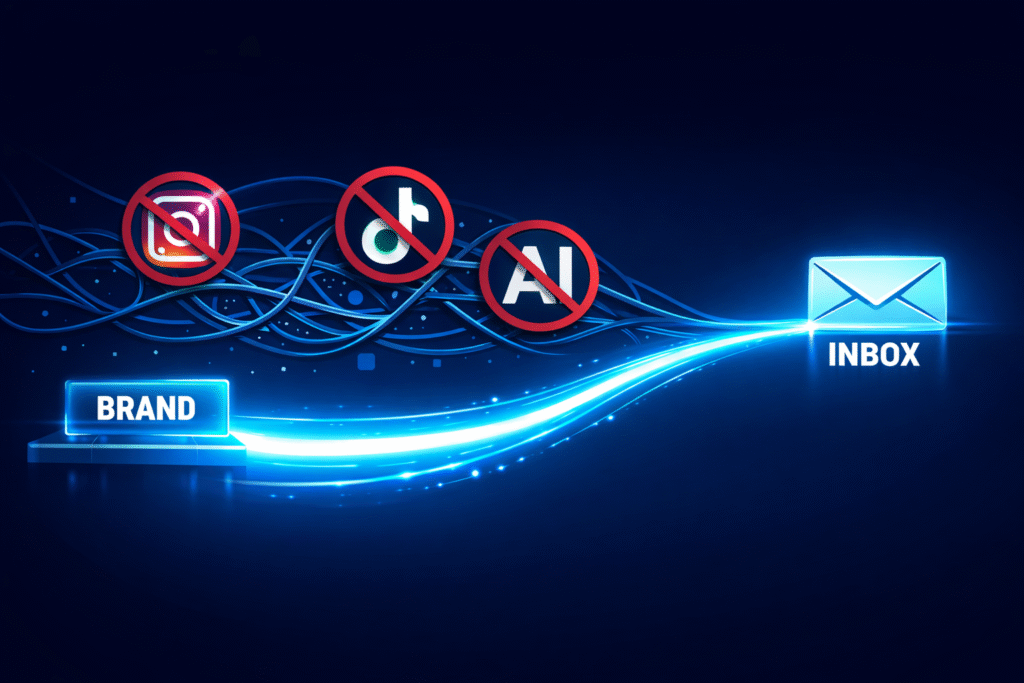
Platform dependency reached crisis levels in 2026. Instagram’s pivot to 90% AI-recommended content meant organic followers rarely see your posts. LinkedIn’s algorithm favors personal profiles over business pages. Reddit’s API changes disrupted third-party tools. YouTube’s shorts algorithm operates independently from subscriptions.
Email sidesteps this chaos entirely. When you send an email in 2026, it lands in your subscriber’s inbox—period. Apple’s Mail Privacy Protection changed open rate tracking, but delivery remains guaranteed. No algorithm decides whether subscribers see your message. No platform policy change can cut your reach overnight. No executive’s whim affects your access.
This direct relationship is priceless in 2026’s fragmented digital landscape. While engagement rates vary by industry, you control everything—strategy, timing, frequency, and content. You can A/B test with AI assistance, iterate based on real-time feedback, and optimize without worrying about external forces. Your email list represents the only marketing leverage you truly own.
Cost-Effectiveness of Email Marketing in 2026
Email marketing remains remarkably affordable despite technological advances. Modern AI-powered platforms start at $25-40 monthly for small lists. Even enterprise solutions with advanced automation, predictive analytics, and AI writing assistants cost a fraction of what businesses spend on paid advertising campaigns that deliver diminishing returns.
The 2026 scaling economics are extraordinary. Growing from 1,000 to 100,000 subscribers doesn’t require proportional cost increases. Most expenses relate to platform subscriptions and content creation—both scale efficiently with AI assistance. A bootstrapped startup can run sophisticated campaigns with ChatGPT-enhanced copy, Claude-optimized timing, and automated personalization, competing head-to-head against Fortune 500 brands.
For startups and growth-stage companies in 2026, email provides unmatched leverage. It builds valuable customer relationships while preserving capital for product development. The combination of low cost, high return, AI amplification, and infinite scalability makes email the cornerstone of efficient growth marketing strategies across every industry vertical.
The Power of AI-Driven Personalization in 2026
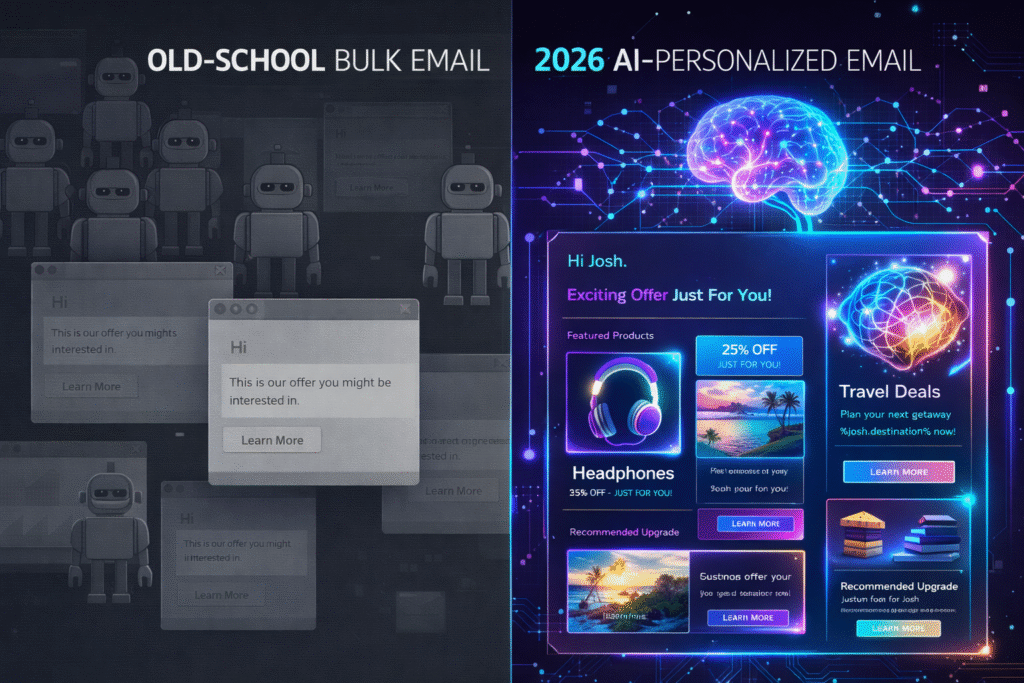
Generic mass emails are extinct. Personalized, AI-enhanced email dominates 2026. Modern platforms use machine learning to segment based on hundreds of variables—past behavior, predicted future actions, sentiment analysis from customer service interactions, browsing patterns, purchase probability scores, and real-time engagement signals.
When subscribers receive AI-curated content tailored to their unique journey stage, engagement explodes. A returning customer receives product recommendations based on collaborative filtering. A cart abandoner gets dynamic pricing based on conversion probability. Someone researching winter coats sees weather-triggered emails when temperatures drop in their location.
Behavioral AI takes personalization to unprecedented levels in 2026. When someone opens an email at 6:47 AM three days in a row, your platform learns and adapts. When click patterns suggest declining interest, re-engagement sequences activate automatically. Generative AI creates unique subject lines for micro-segments. This intelligent approach makes subscribers feel understood at an individual level, driving open rates 40-60% higher than industry averages and conversion rates that compound monthly.
Email Automation: The 2026 Growth Engine
Automation has evolved from simple drip campaigns into sophisticated AI orchestration. Once configured, automated sequences in 2026 work as intelligent growth systems, continuously learning, adapting, and optimizing without human intervention.
Welcome sequences now use natural language processing to analyze signup source, infer intent, and personalize onboarding paths. These AI-driven first interactions predict lifetime value within 48 hours and adjust nurture strategy accordingly. Well-optimized welcome series generate 3-5x more revenue than 2024 benchmarks.
Abandoned cart emails employ dynamic pricing, scarcity triggers, and predictive product recommendations. Machine learning determines optimal discount levels to maximize conversion while preserving margin. These emails achieve 25-35% conversion rates when properly configured.
Re-engagement campaigns use sentiment analysis and churn prediction models to intervene before subscribers disengage. Lifecycle emails celebrate micro-milestones, deploy surprise-and-delight tactics, and strengthen emotional bonds through personalized storytelling. Post-purchase sequences use computer vision to analyze product usage from customer photos and suggest complementary items. This automated ecosystem runs 24/7, self-optimizing through reinforcement learning, turning email into a autonomous revenue channel that scales with your business.
Email Marketing Across the 2026 Customer Lifecycle
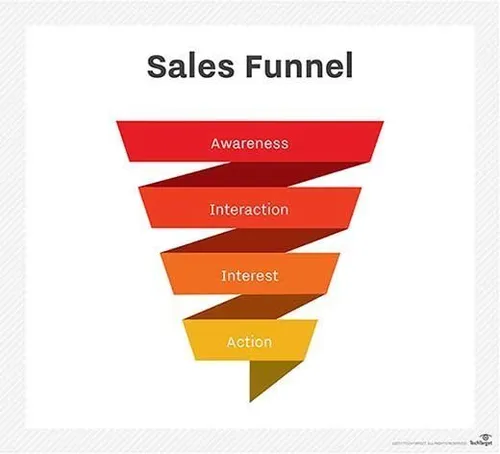
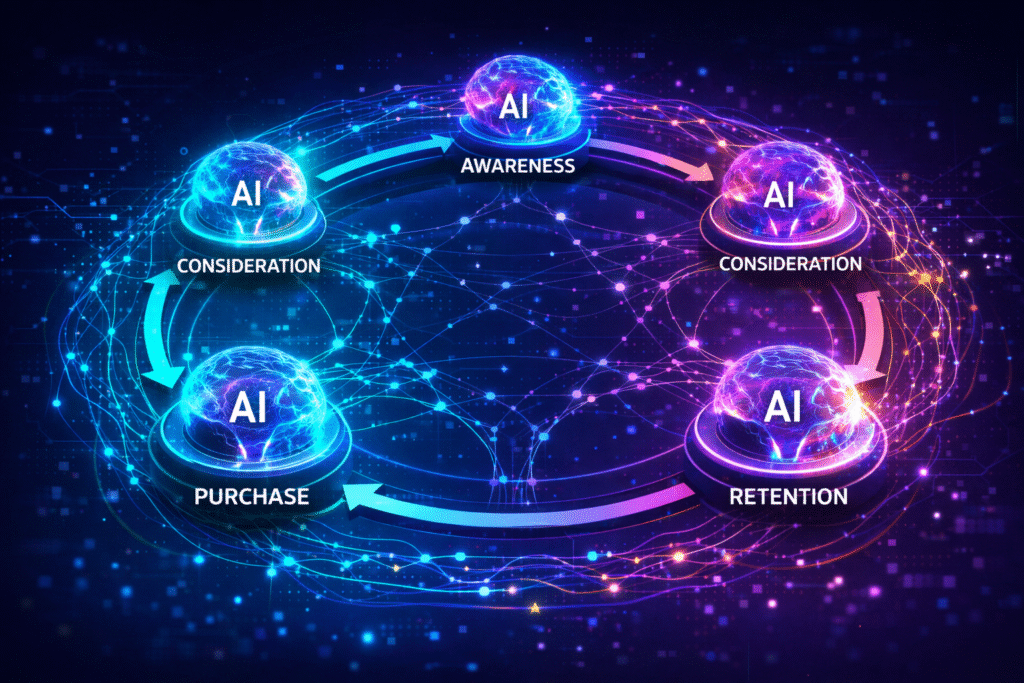
Email’s versatility shines when mapped to the complete customer journey in 2026. At the awareness stage, AI-curated educational content attracts and nurtures potential customers. Interactive newsletters with embedded quizzes, personalized learning paths, and adaptive content establish authority before any sales attempt.
For prospects in consideration phase, generative AI creates targeted content addressing specific pain points identified through behavioral analysis. Dynamic case studies featuring similar customers, interactive ROI calculators, and personalized product comparisons move them toward decisions. The conversion phase deploys social proof algorithms, urgency optimization, and AI-determined incentive offers.
Post-purchase, email shifts to intelligent onboarding using progress tracking, contextual help articles, and predictive support. These touchpoints reduce returns, accelerate product adoption, and establish foundation for retention. As customers mature, email facilitates AI-recommended upsells, predictive cross-sells, and referral programs with dynamic incentives. This comprehensive lifecycle approach maximizes customer lifetime value while strengthening relationships at every touchpoint. Understanding this journey is essential for building customer trust in the AI era.
Email Marketing for Different Business Models in 2026
E-commerce brands in 2026 leverage email as their primary revenue driver. AI-powered product recommendations analyze browsing patterns, purchase history, and collaborative filtering data to suggest items with 60-80% relevance accuracy. Visual search integration lets customers email product images to trigger automated shopping sequences. Real-time inventory sync creates urgency when stock runs low on viewed items.
Service-based businesses use email for sophisticated lead nurturing across extended sales cycles. AI-generated thought leadership, personalized video messages, and predictive content sequencing maintain engagement through multi-month decision processes. Meeting scheduling, proposal delivery, and client communication all flow through automated email workflows.
B2B companies deploy account-based email strategies powered by intent data and predictive analytics. Multi-threaded campaigns reach different stakeholders with role-specific messaging. Content recommendations adapt based on funnel stage, company size, and industry vertical. Integration with CRM platforms creates seamless handoffs between marketing and sales.
Startups and small businesses in 2026 use email as their growth equalizer. No-code automation builders, AI writing assistants, and template libraries let lean teams execute enterprise-grade campaigns. Email’s low barrier to entry and high ROI make it the perfect channel for bootstrapped companies building early traction.
Email Marketing vs Paid Advertising in 2026
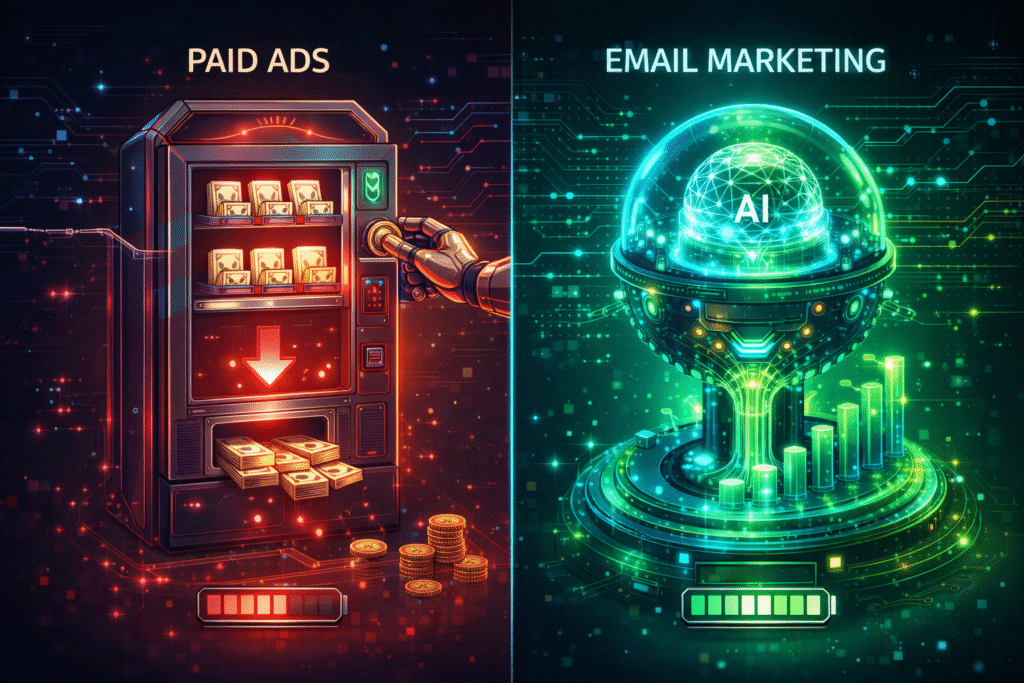
Paid advertising and email serve complementary but distinct purposes in 2026. Ads excel at cold audience acquisition and rapid testing. They’re ideal for launching products, validating messaging, and driving immediate awareness spikes.
However, paid advertising economics have deteriorated. Apple’s ATT framework reduced targeting precision. Google’s Privacy Sandbox limits conversion tracking. Meta’s AI-powered ad system prioritizes platform revenue over advertiser ROI. Average CAC across major platforms increased 40-60% since 2024. Ad fatigue happens faster. Banner blindness intensifies.
Email provides the sustainability paid ads cannot. While acquisition may take longer, each subscriber represents an appreciating asset. The same audience generates revenue repeatedly through automated sequences, campaign broadcasts, and lifecycle triggers—zero incremental acquisition cost. Smart 2026 businesses use paid ads to acquire subscribers at break-even or slight loss, then use email to generate 5-10x LTV through retention and expansion. This integrated approach captures acquisition speed from ads and profitability from email.
Common Email Marketing Mistakes Businesses Still Make in 2026
Over-promotion remains the fastest way to kill engagement. When every message sells, subscribers tune out—AI personalization can’t save bad strategy. The proven 80/20 rule endures: eighty percent value, twenty percent promotion. Education, entertainment, and genuine utility earn the right to occasionally make offers.
Under-utilizing AI capabilities wastes opportunity. Businesses using email platforms like spreadsheet tools miss the point entirely. Segmentation beyond basic demographics, predictive send-time optimization, automated A/B testing, and dynamic content blocks should be standard practice in 2026—yet many marketers ignore these features.
Inconsistent sending patterns still confuse subscribers. Emailing three times one week, then disappearing for a month creates no habit or expectation. Consistency builds trust and maintains top-of-mind awareness through algorithmic uncertainty.
Ignoring mobile optimization is inexcusable in 2026. Over 75% of emails are opened on mobile devices. Single-column layouts, thumb-friendly buttons, and scannable content aren’t optional—they’re mandatory for success.
Weak subject lines doom even great content. With AI writing assistants readily available, there’s no excuse for generic subject lines. Neglecting testing means leaving money on the table—smart marketers run continuous subject line experiments, learning what resonates with specific segments.
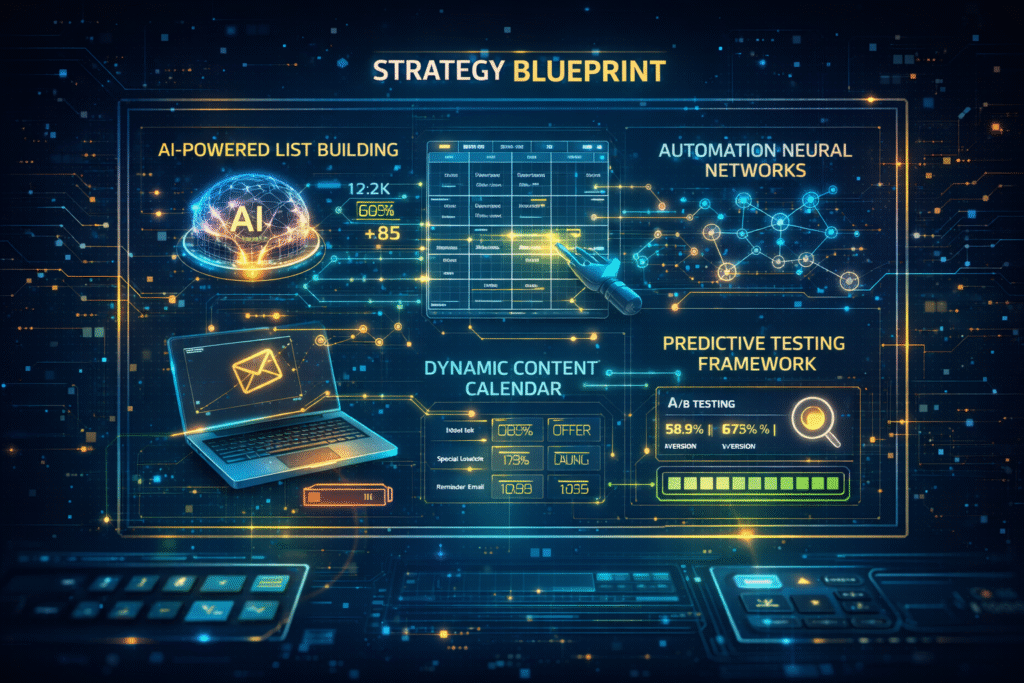
How to Build a High-ROI Email Marketing Strategy in 2026
Successful email marketing starts with quality list building through valuable lead magnets and clear value propositions. In 2026, this means interactive assessments, personalized reports, AI-curated content hubs, and exclusive community access. A smaller engaged list of 5,000 subscribers outperforms a cold list of 50,000 every time.
Content planning requires AI assistance to scale. Map content to customer lifecycle stages, seasonal trends, and business objectives. Use generative AI for initial drafts, but maintain human oversight for brand voice and strategic direction. Mix educational content, entertainment, and promotional messages based on subscriber behavior patterns.
Determine optimal sending frequency through AI-powered testing. Modern platforms analyze individual engagement patterns and recommend personalized sending schedules. Some subscribers want daily updates; others prefer weekly digests. Let machine learning optimize cadence per segment.
Subject line optimization uses A/B testing combined with GPT-4 variations. Test questions versus statements, curiosity gaps versus direct benefits, personalization versus general appeal, urgency versus value-focus. Track performance across segments—what works for engaged subscribers often differs from re-engagement targets. Understanding distinctions like search terms vs keywords informs how you craft compelling subject lines that drive opens.
Every email needs a crystal-clear call-to-action. What specific action should subscribers take? Make CTAs prominent with high-contrast buttons, action-oriented copy, and clear value propositions. Whether driving to content, encouraging purchases, or requesting feedback, eliminate ambiguity.
Metrics That Actually Matter in Email Marketing (2026 Edition)
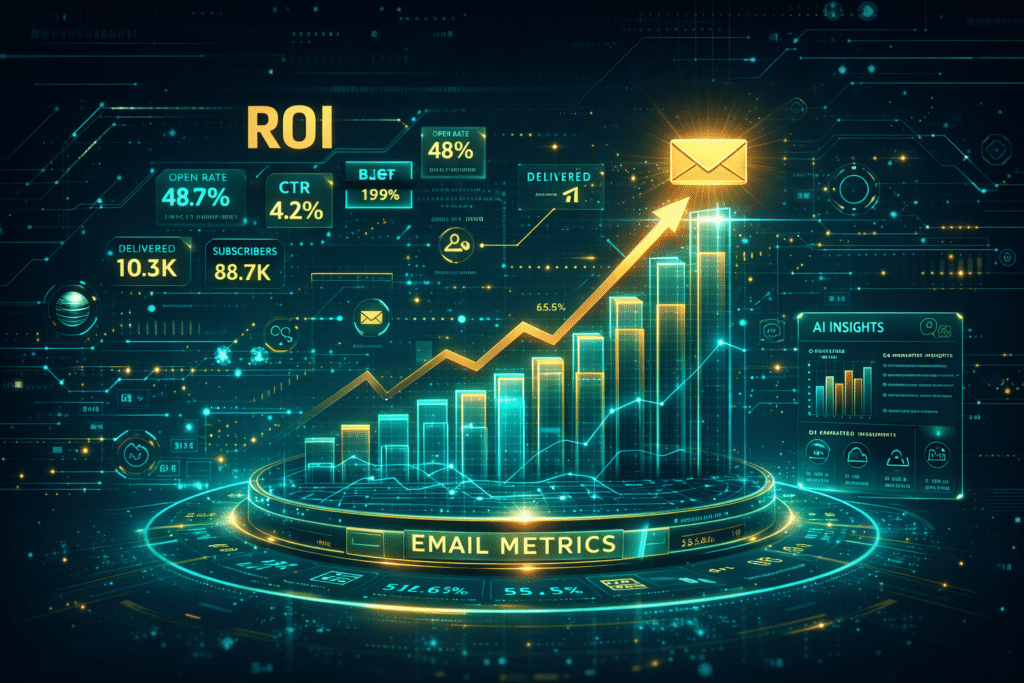
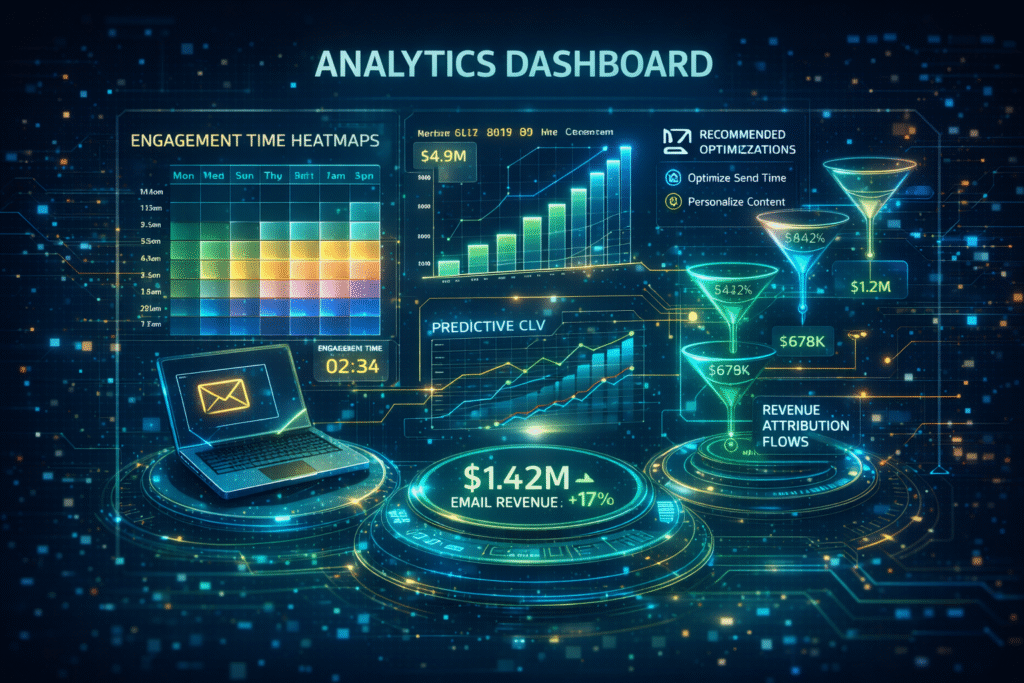
Open rates remain directionally useful despite privacy changes, but smart marketers focus on engagement time—how long subscribers interact with content. Modern platforms track scroll depth, click patterns, and content consumption to provide richer engagement insights than simple opens.
Click-through rates reveal content resonance and CTA effectiveness. High CTR indicates relevant, compelling content. In 2026, track not just clicks but click-to-conversion rates—which links drive actual business outcomes versus curiosity clicks.
Conversion rate connects email directly to revenue. Whether measuring purchases, signups, downloads, or qualified leads, conversion rate reveals true impact. Attribution modeling in 2026 tracks multi-touch journeys, showing email’s role in complex customer paths.
Revenue per email calculates actual financial return. Divide total attributed revenue by emails sent to understand campaign profitability. Top performers in 2026 generate $0.50-2.00 per email sent through optimized monetization strategies.
Predictive customer lifetime value shows email’s long-term impact. Machine learning models forecast future value based on engagement patterns, purchase frequency, and behavioral signals. Email subscribers typically demonstrate 3-5x higher CLV than customers acquired through other channels. This metric validates email’s role in sustainable business growth.
The Role of Email in Growth Marketing (2026)
Growth marketing in 2026 emphasizes sustainable, AI-optimized strategies that compound over time. Email embodies this philosophy perfectly. While acquisition-focused marketing hits saturation points, retention-focused email becomes exponentially more valuable as your customer base grows.
Email drives retention through intelligent, regular contact. AI determines optimal touchpoint frequency per subscriber. Regular value delivery keeps your brand relevant and creates opportunities for repeat purchases. Research consistently shows retaining existing customers costs 5-7x less than acquiring new ones—email makes retention systematically scalable.
Upselling and cross-selling opportunities flow naturally through AI-powered email. Predictive models identify expansion opportunities before customers realize needs themselves. Strategic product recommendations, upgrade prompts, and complementary product suggestions generate 30-40% of total email revenue for mature programs.
Long-term customer relationships built through email create viral growth loops. Satisfied customers become advocates through referral programs embedded in automated sequences. Email nurtures these relationships systematically, transforming transactional customers into brand evangelists who drive acquisition through word-of-mouth and social proof.
The Future of Email Marketing Beyond 2026
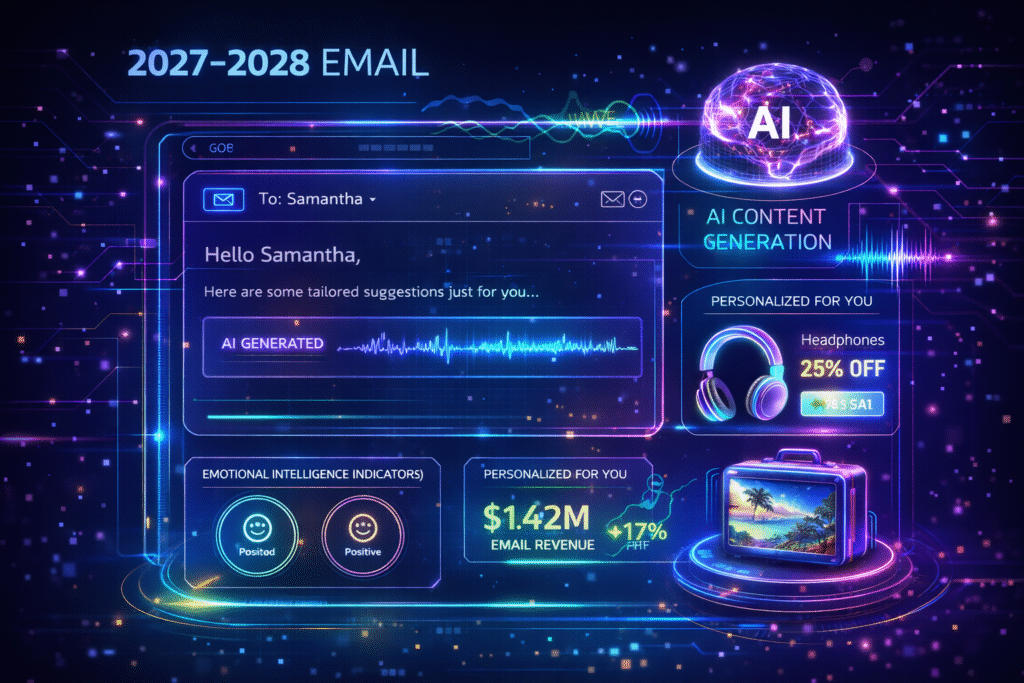
Artificial intelligence continues enhancing email rather than replacing it. By 2027-2028, we’ll see hyper-personalized content generated in real-time based on live behavioral signals. AI-powered personalization will analyze tone preferences, content consumption patterns, and emotional responses to craft perfectly tailored messages.
Predictive sending will evolve beyond optimal time to optimal context—sending emails when subscribers are most receptive based on mood indicators, location data, and activity patterns. Voice-activated email responses will become common as smart assistants integrate deeper into daily routines.
Generative AI will create unique creative variations for every subscriber—personalized images, custom videos, and dynamic layouts adapted to individual preferences. However, the human element remains irreplaceable. Strategy, brand authenticity, and genuine connection require human creativity, emotional intelligence, and ethical judgment.
Email’s fundamental value proposition—direct, permission-based communication—remains future-proof. Regardless of metaverse adoption, AI search engines reshaping discovery, or new platforms emerging, businesses will always need reliable ways to reach audiences they own. Email’s inherent structure and economics ensure continued relevance as the digital landscape evolves.
Final Thoughts: Why Email Marketing Still Matters in 2026
Email marketing’s dominance isn’t accidental—it’s structural. The combination of cost-effectiveness, scalability, AI-enhanced personalization, and audience ownership creates unmatched marketing leverage. While platforms rise and fall, email remains the bedrock of profitable digital marketing.
Businesses thriving in 2026 treat email as critical infrastructure, not a nice-to-have. They invest in building quality lists, leverage AI to scale personalization, and optimize systematically using data. They understand that sustainable growth requires owned channels that compound value over time.
Email marketing isn’t about shortcuts or growth hacks. It’s about building genuine relationships with people who have explicitly chosen to hear from you. When executed well, email becomes an autonomous growth engine that reliably drives revenue while deepening customer bonds. That combination makes email marketing irreplaceable for businesses serious about long-term success in 2026 and beyond.
Ready to Build Your 2026 Email Marketing System?
Follow us for cutting-edge marketing insights and AI-enhanced growth strategies that convert. We share weekly tactics, real-world case studies, and frameworks that help businesses build sustainable email marketing systems delivering measurable ROI in the age of AI.